Property Manager's Checklist for Secure Rent Collection
UAE property managers' checklist to secure rent collection with digital payments, Ejari compliance, tenant verification and fraud prevention.
Property Manager's Checklist for Secure Rent Collection
Rent collection in the UAE can be challenging, but adopting secure, digital systems ensures smoother operations, legal compliance, and tenant satisfaction. Here's what you need to know:
- Move Beyond Post-Dated Cheques (PDCs): The UAE is shifting to digital payments like credit cards, bank transfers, Apple Pay, and UAE Direct Debit System (DDS).
- Boost On-Time Payments: Digital platforms like Rewa have increased on-time rent payments from 32% to 95%, with a 98.4% transaction success rate.
- Ensure Compliance: All payments must be in AED, VAT-compliant, and linked to Ejari or Tawtheeq contracts.
- Set Clear Policies: Tenancy contracts should specify rent terms, payment methods, and late penalties, with clear communication to tenants.
- Verify Tenants: Use Emirates ID, UAE Residency Visa, and passports for identity checks.
- Secure Payment Systems: Choose platforms with encryption, multi-factor authentication (MFA), and UAE-specific features like Ejari integration.
- Prevent Fraud: Implement automated KYC, real-time bank balance verification, and maintain digital audit trails.
- Encourage Timely Payments: Offer incentives like loyalty rewards or points for on-time payments.
Key takeaway: Modernizing rent collection with secure, automated systems reduces risks, ensures compliance, and improves cash flow. Platforms like Rewa simplify this process, making rent collection efficient and reliable in the UAE.
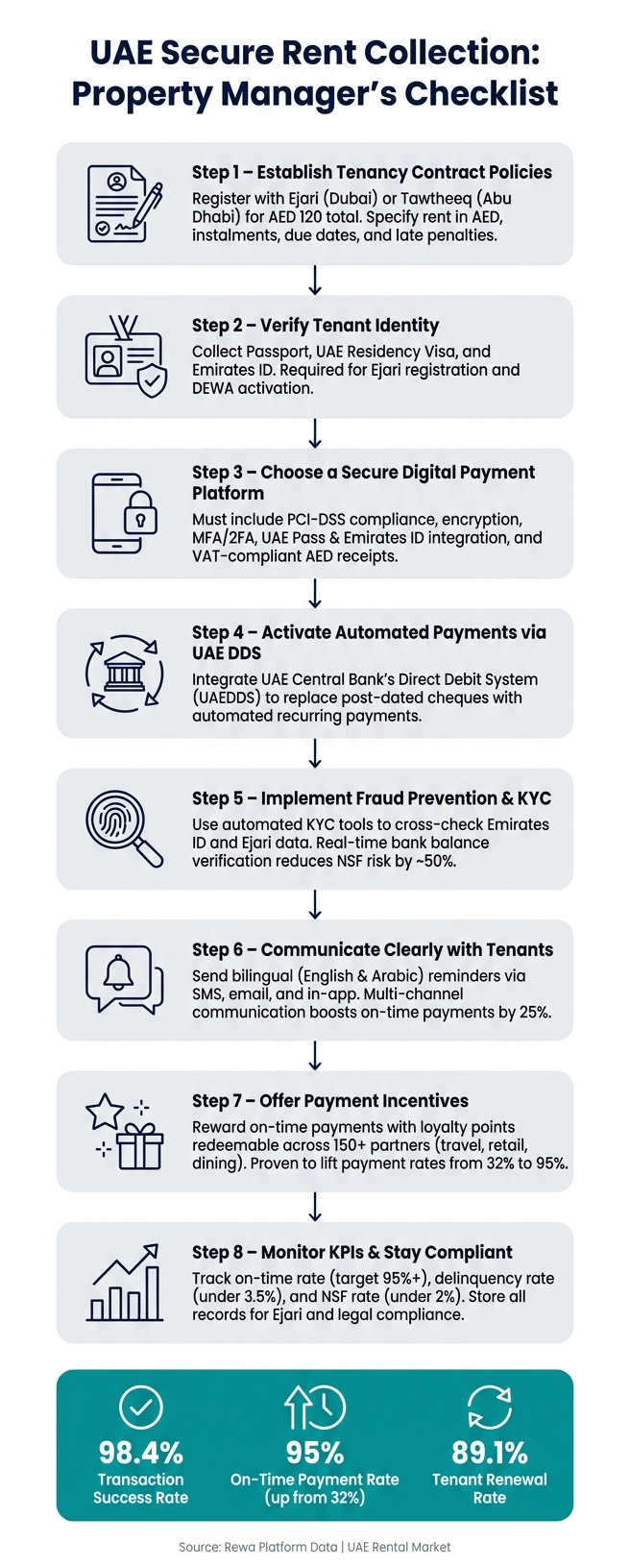
UAE Secure Rent Collection: Step-by-Step Property Manager Checklist
Rent Collection Policies to Put in Place First
Before diving into modern digital systems for rent collection, it's crucial to establish solid, well-defined policies. These policies lay the groundwork for everything else, including digital payment methods and fraud prevention strategies.
Setting Clear Rent Terms in Tenancy Contracts
In the UAE, tenancy contracts must be registered with Ejari in Dubai or Tawtheeq in Abu Dhabi to be legally binding. The registration fees are modest, costing AED 100, plus an AED 10 innovation fee and AED 10 knowledge fee. This small investment ensures legal protection for both landlords and tenants.
The details within the contract are equally important. Ambiguities about payment terms often lead to disputes. To avoid this, the contract should clearly outline:
- The total rent amount in AED
- The number of instalments
- Exact payment due dates
- Accepted payment methods (e.g., post-dated cheques, bank transfers, or direct debits)
It's important to remember that verbal agreements hold no legal weight in the UAE. Additionally, the contract should specify key terms such as:
- Security deposit requirements: Typically 5% of annual rent for unfurnished properties and 10% for furnished ones.
- Late payment penalties: Include clear terms for any fees.
- Deductions: Outline conditions for deductions with photo evidence.
If any terms need to be adjusted during the contract period, written consent from the tenant is mandatory. For rent increases, Dubai law requires at least 90 days' written notice.
"A well-structured addendum in your lease, covering repairs, subleasing and key return can take action in many common disputes." - Leanne Ruscoe, Head of Middle East & Africa, Benham and Reeves
Once the contract terms are in place, the next step is thorough tenant onboarding and identity checks to strengthen your rental process.
Tenant Onboarding and Identity Verification
Proper identity verification is a critical first step to protect against fraud and payment issues. Before finalising any agreement, ensure the tenant provides and verifies:
- Passport
- UAE Residency Visa
- Emirates ID
These documents are not only essential for Ejari registration but are also required to activate DEWA utility services. Storing these documents digitally can help prevent data mishandling and make retrieval easier if a dispute arises at the Rent Disputes Settlement Centre (RDC).
During onboarding, take the time to clearly explain the payment process to tenants. Cover due dates, how reminders will be issued, and the steps that follow in case of missed payments. This clarity upfront helps avoid misunderstandings and sets a professional tone for your relationship with the tenant.
sbb-itb-80e96b1
Setting Up Secure Digital Payment Systems
Selecting the right digital tools for rent collection is crucial. A good platform not only reduces the risk of fraud but also streamlines administrative tasks and ensures every payment is easily traceable. Here’s how you can pick a system that aligns with UAE regulations and operational requirements.
How to Choose a Secure Rent Payment Platform
When evaluating platforms, make sure they cater to the unique needs of the UAE rental market. At a minimum, the platform should include PCI-DSS compliance, encryption for data protection, and multi-factor authentication (MFA/2FA). These features are essential for safeguarding financial information.
On top of these basics, the platform should also support UAE-specific processes. Look for features like integration with UAE Pass and Emirates ID for tenant verification, compatibility with Ejari or Tawtheeq for tenancy records, and the ability to issue VAT-compliant receipts in AED that include a Tax Registration Number (TRN). Additionally, prioritise platforms that support the UAE Direct Debit System (DDS) for automated recurring payments, reducing the need for tenants to initiate transactions manually.
| Feature | What to Look For |
|---|---|
| Security | PCI-DSS compliance, encryption, MFA/2FA |
| Identity Verification | UAE Pass and Emirates ID integration |
| Compliance | Ejari/Tawtheeq linking, VAT-ready invoicing in AED |
| Automation | Virtual IBANs, webhook-based real-time status updates |
| Payment Methods | Card, bank transfer, Apple Pay, Google Pay, UAE DDS |
One particularly helpful option is virtual IBANs, which automatically reconcile payments with tenant invoices. This eliminates the need for manual tracking and reduces the chances of errors or misplaced payments.
Using Rewa for Automated Rent Collection
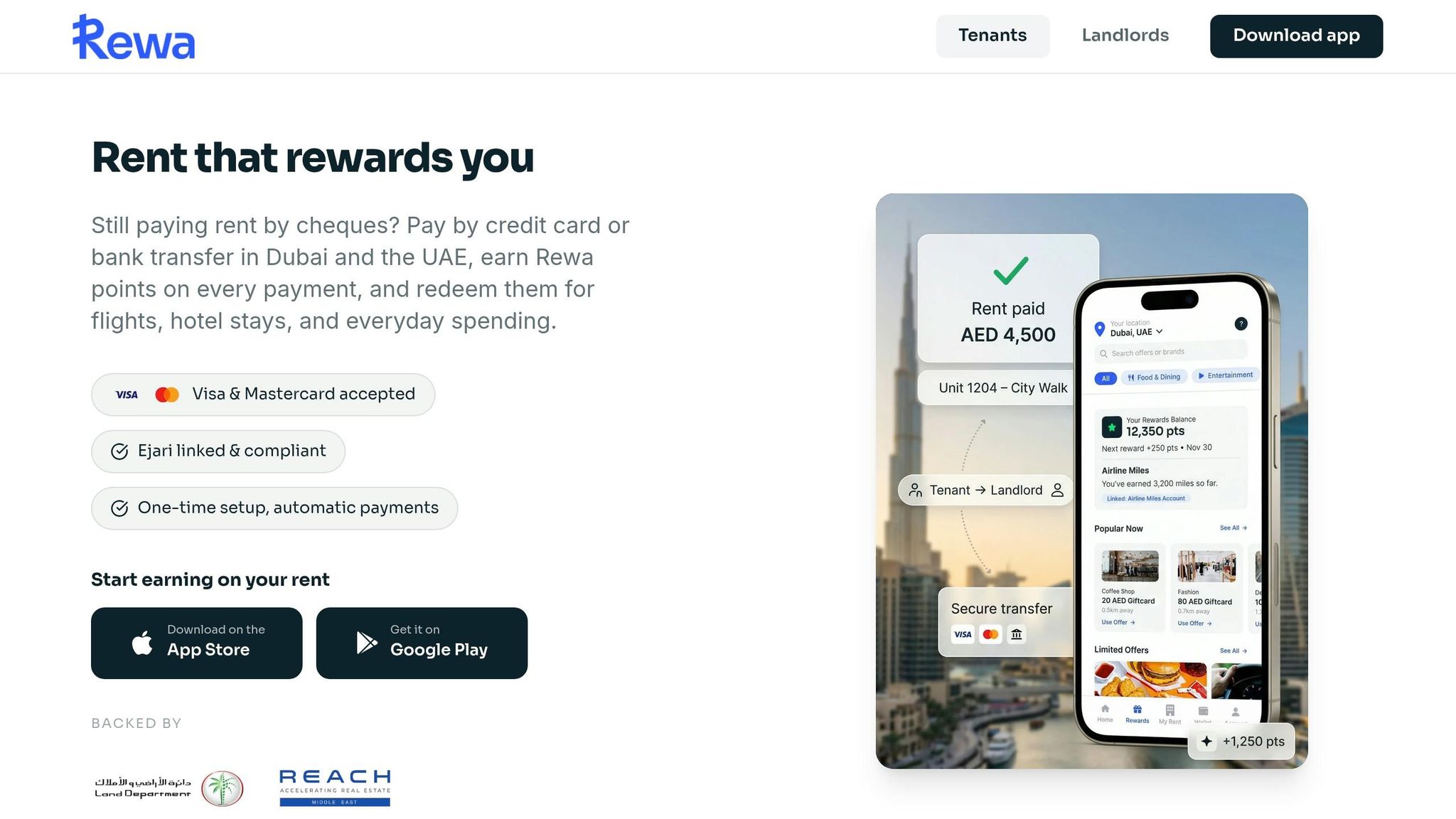
For a solution tailored to the UAE rental market, Rewa is worth considering. This platform integrates seamlessly with DLD and Ejari, enabling tenants to pay rent via credit card or bank transfer.
Rewa ensures compliance by linking payments to verified identities through UAE Pass and Ejari contracts. This approach guarantees that every transaction is tied to a registered tenancy, creating a clear and secure audit trail.
The platform’s performance speaks volumes. According to Rewa, they’ve achieved a 98.4% transaction success rate and boosted on-time payments from 32% to 95% after implementation. Property managers benefit from a unified dashboard that provides real-time insights across all units, making it easier to track overdue payments without manual follow-ups.
"Our private beta proved the demand for online rent payments and collection. Now we're scaling nationwide and broadening the rewards network. Rent should work harder for tenants and smarter for landlords." - Najib Khanafer, Co-founder and CEO of Rewa
Another advantage? Rewa doesn’t charge landlords any fees, making it an appealing option for property managers aiming to modernise their processes without increasing costs. Once your platform is in place, it’s equally important to secure your bank account to complete your rent collection system.
Bank Account Security Best Practices
Your bank account security is just as vital as the platform you choose. Together, they create a robust system for safeguarding rent payments. Start by limiting access to account details - only authorised team members should be able to view, approve, or modify payment settings. No single individual should have unrestricted control over all financial functions.
Enable real-time alerts to monitor account activity and conduct regular reconciliations to catch any discrepancies early. Automated reporting tools can simplify this process and flag potential issues before they escalate.
If your platform supports it, set up automated payout cycles (weekly or monthly) to transfer collected funds to property owners. This reduces manual handling, ensures predictable cash flow, and keeps financial records transparent and easy to audit.
Fraud Prevention and Payment Risk Controls
Once your digital payment platform is secure, the next step is to focus on fraud prevention and reducing payment risks. Maintaining ongoing security is crucial, and a multi-layered approach to risk management is often the most effective.
Payment Verification and Anti-Fraud Measures
The verification process doesn't end with onboarding. Continue verifying tenants using Emirates ID, passport, Ejari registration, and Title Deed. Automated KYC (Know Your Customer) tools can instantly cross-check this data, significantly cutting down the risks of identity fraud. In fact, automated identity and bank verification processes can reduce manual onboarding efforts by approximately 50%.
"Bank statements can be faked. Financial Connections data cannot." - Ori Tamuz, CEO, DoorLoop
For ongoing protection, real-time bank balance verification is a practical way to avoid failed payments. By integrating with the UAE Central Bank’s Direct Debit System (UAEDDS), you can establish a secure, automated payment process that eliminates the reliance on post-dated cheques.
Below is a breakdown of common payment risks and their controls:
| Payment Risk | Control | Local Requirement |
|---|---|---|
| Identity Fraud | Automated KYC with Emirates ID & Ejari validation | Federal Decree-Law No. 34 of 2021 |
| Bounced Cheques / NSF | Real-time bank balance verification via UAEDDS | UAE Central Bank Direct Debit System |
| Payment Disputes | Automated digital audit trails and receipts | UAE Public Prosecution evidence standards |
| Rent Default | Landlord insurance (2%–4% of annual rent) or RNPL platforms | DLD-regulated risk transfer |
In the UAE, electronic fraud carries severe penalties, including fines up to AED 1,000,000 and possible imprisonment under Federal Decree-Law No. 34 of 2021. Keeping detailed digital audit trails is not just a best practice - it’s essential for providing evidence in legal disputes.
Data Security and Access Control
Anti-fraud measures should be paired with strict data access controls. Use role-based permissions to ensure that only authorised personnel can view, edit, or approve transactions. No single individual should have unrestricted access to all financial operations. Regularly review access permissions to revoke outdated privileges.
Secure data storage with encryption, combined with detailed audit logs, helps track who accessed what and when. This creates a clear accountability framework. Platforms like Rewa offer enterprise-grade security features, ensuring that sensitive information is handled responsibly and providing property managers with peace of mind.
Managing Late Payments and Disputes
A structured approach to late payments can ease tensions for both managers and tenants. Begin with automated reminders sent via SMS or WhatsApp before the payment due date. If payment is missed, escalate from a friendly reminder to a formal notice. This step-by-step method helps identify genuine financial difficulties early, preventing them from escalating into disputes.
When disputes do occur, digital records become critical. UAE tenancy law requires payment schedules to be clearly outlined in the tenancy agreement and registered with Ejari to hold up in legal proceedings. Without proper documentation, resolving issues through the Rental Dispute Settlement Centre (RDSC) becomes much harder. Keeping thorough records from the start ensures you’re prepared, complementing earlier measures like secure payment processing and tenant verification.
Tenant Communication and Payment Incentives
Effective tenant communication works hand-in-hand with secure digital payments to ensure smooth rent collection.
Keeping Tenants Informed
Clear communication can significantly reduce late payments. When tenants know exactly what they owe, when it’s due, and how to pay, the chances of on-time payments improve. In fact, combining multi-channel payment options with clear communication has been shown to lead to a 25% increase in on-time payments.
Using bilingual communication - via email, SMS, and in-app notifications - can make a big difference, especially in a diverse tenant population like the UAE. Reaching out in both English and Arabic ensures everyone understands their payment responsibilities. However, reminders need to strike a balance: frequent enough to be helpful but not so frequent that they become intrusive. For tenants who are less familiar with digital tools, a short orientation can help. Pair this with a self-service portal where tenants can access balances, payment histories, and receipts without needing to contact the management team.
"From the tenant perspective, a lot of people were not able to pay their rent purely because they were not given the means to, most rent collection in Kuwait and UAE happen via cash or cheques, this has interestingly changed." - Sahar Abdulrasoul
Good communication paves the way for effective incentives and thoughtful responses.
Using Rewards to Encourage On-Time Payments
Reminders are helpful, but some property managers are taking a more proactive approach by offering rewards for timely payments. For example, Rewa uses a loyalty programme where tenants earn points for every on-time payment. These points can be redeemed with over 150 partners across sectors like travel, retail, dining, and lifestyle - or even applied toward future rent or utility bills.
"Rent is often the largest recurring expense in people's lives, yet tenants in Dubai have historically received nothing in return and still pay rent through cheques. We've applied proven loyalty models from the airline and hotel industries to rent, creating a system that rewards tenants while improving cash flow and efficiency for landlords." - Ramzi Mneimneh, Founder, Rewa
Here’s how a rewards-based model like Rewa compares to traditional rent collection:
| Feature | Standard Rent Collection | Rewa Digital Rewards Model |
|---|---|---|
| Payment Method | Cheques or manual transfers | Card or bank transfer |
| Tenant Incentive | None; transactional | Points for every on-time payment |
| Redemption | Not applicable | Across 150+ partners (travel, retail, dining) |
| Tracking | Manual reconciliation and follow-ups | Automated tracking and digital receipts |
| Compliance | Manual Ejari/DLD alignment | Automated workflows aligned with UAE rental practices |
Landlords can join the Rewa Alliance without any setup fees, gaining access to automated payment tracking and digital receipts that meet Ejari requirements.
Addressing Payment Issues with Care
Even with clear communication and rewards, some payment delays may still occur. A structured, empathetic approach to handling these situations is key to maintaining a positive landlord–tenant relationship while enforcing necessary boundaries. Below is an example of a practical escalation process:
| Step | Action | Purpose |
|---|---|---|
| 1. Reminder | Automated email/SMS 2–3 days before the due date | Helps prevent oversight |
| 2. Support | Personal outreach to address financial or technical issues | Encourages open dialogue |
| 3. Formal Notice | Issue a formal notice | Ensures legal compliance |
| 4. Resolution | Arrange payment plans or settlements | Avoids costly legal proceedings |
| 5. Documentation | Record all communications and payments | Provides protection in legal disputes |
Automation can handle routine tasks like reminders, but human follow-up is essential for cases involving genuine hardship or technical problems. For instance, if your payment platform experiences an outage, it’s crucial to have a backup payment option ready. Tenants should never face penalties for system failures outside their control. Keep a detailed log of all interactions, including timestamps, to maintain a clear and defensible record.
Monitoring and Improving Rent Collection Over Time
With secure digital systems and solid risk controls in place, keeping a close eye on rent collection is crucial for long-term success. Rent collection isn’t a “set-it-and-forget-it” process - it requires ongoing oversight and adjustments to stay on track.
"Consistent tracking is what separates landlords who react to crises from those who anticipate them." - Peter Koch, Expert in Property Management and SaaS, ManageCasa
This makes it essential to focus on performance metrics that provide a clear picture of how your rent collection efforts are doing.
Regular Performance Reviews
Key performance indicators (KPIs) give you insight into the health of your rent collection process. Tracking these metrics against industry benchmarks can guide your strategy:
| KPI | How to Calculate | Industry Benchmark |
|---|---|---|
| On-time payment rate | Payments by due date ÷ total units | 95%+ |
| Average days to collect | Mean collection date − due date | 2.1 days |
| Delinquency rate | Units 30+ days past due ÷ total units | Under 3.5% |
| Late fee collection rate | Fees collected ÷ fees assessed | 89% |
| NSF/returned payment rate | Returned payments ÷ total payments | Under 2% |
| Staff hours on collection | Time tracked per month | Under 10 hrs per 200 units |
For a comprehensive understanding, review metrics like net cash flow, vacancy rates, and delinquencies monthly. Operating expense ratios and tenant turnover should be assessed quarterly. Establish a baseline by documenting current on-time payment rates and staff hours spent on collections.
These KPIs not only help measure success but also play a role in ensuring compliance and maintaining accurate records.
Compliance and Record-Keeping
In the UAE, accurate record-keeping isn’t just good practice - it’s a legal requirement. All contracts, receipts, and communication logs must be stored in an auditable, easily accessible format. Failure to follow compliance rules, especially regarding late fees, can result in hefty penalties, with legal fees reaching up to AED 44,000 per violation.
To stay compliant, integrate your rent collection platform with the Ejari system and use UAE Pass for tenant identity verification. Additionally, leveraging the UAE Central Bank's Direct Debit System (UAEDDS) provides a structured, regulated infrastructure for automated recurring payments.
Proper records lay the groundwork for actionable insights, which analytics can help you uncover.
Using PropTech Analytics to Improve Results
Analytics tools transform raw payment data into actionable insights. Platforms like Rewa, for instance, automatically track payment trends across your portfolio, allowing you to spot patterns like recurring late payments before they disrupt cash flow.
Rewa has shown impressive results, increasing on-time rent payment rates from 32% to 95%, with a live transaction success rate of 98.4%. These numbers highlight how data-driven decisions can make a real difference. For example, analytics can reveal whether SMS or email reminders work better for your tenants or if offering incentives for autopay is speeding up collections. Structured checklists have also been shown to help property managers achieve target collection rates 2.4 times faster.
Conclusion
Securing rent collection in the UAE starts with a strong foundation: clear tenancy agreements, thorough tenant verification, digital payment systems, and consistent oversight. Each component complements the others, transforming a previously fragmented, cheque-reliant system into a streamlined and dependable workflow.
Moving away from post-dated cheques isn’t just about convenience - it’s about safeguarding cash flow, ensuring compliance with DLD and Ejari regulations, and fostering trust with tenants. Property managers who embrace structured digital solutions often experience tangible benefits, such as fewer late payments and reduced administrative efforts.
Rewa integrates these elements into one cohesive platform. The results speak for themselves: an on-time payment rate that has climbed to 95% (from just 32%), a 98.4% success rate for live transactions, and a tenant renewal rate of approximately 89.1%. As Najib Khanafer, Co-founder and CEO of Rewa, explains:
"Rent should work harder for tenants and smarter for landlords."
For property managers looking to modernise their operations, the checklist outlined in this article provides a clear roadmap. Take it step by step - verify identities using UAE Pass, link Ejari contracts, activate automated payments, track your KPIs regularly, and use incentives to encourage timely payments. The result? A rent collection process that’s secure, efficient, and beneficial for all parties involved.
FAQs
How can I switch tenants from cheques to digital rent payments?
To move tenants from cheque payments to digital rent transactions, start by having an open conversation with your landlord or property manager. Emphasise the ease and safety digital payments provide for both parties. Once agreed, choose a trusted platform like Rewa and, if necessary, update the rental agreement to reflect the new payment method.
From there, create accounts on the platform, link your bank details, and set up automatic or scheduled payments. Keeping the lines of communication open throughout the process will help ensure a seamless and dependable transition to digital payments.
What do I need to stay Ejari/Tawtheeq and VAT compliant?
The exact steps to ensure compliance with Ejari/Tawtheeq and VAT regulations aren't outlined here. To stay on the right side of UAE laws, it's essential to consult with the appropriate authorities or seek advice from legal and regulatory experts. They can provide precise guidance tailored to your specific circumstances.
How can I reduce fraud and disputed rent payments?
To reduce the risk of fraud and disputes in rent payments, it's crucial to rely on secure online payment methods. Look for platforms that offer fraud prevention tools, such as end-to-end encryption, PCI DSS compliance, and two-factor authentication. These features help safeguard sensitive information and ensure transactions are protected.
Another effective step is verifying tenant identities during the onboarding process. This adds an additional layer of security while building trust. Alongside this, maintaining clear and open communication with tenants is key to avoiding misunderstandings.
Automating payment reminders - whether for upcoming due dates or overdue payments - can further simplify the process. Systems that automatically apply late fees also help keep things transparent and minimise disputes over timing, making the entire payment process smoother and more reliable.