How to Increase Tenant Retention with Rewards Programs
Rewards-based rent and digital payments reduce turnover, boost on-time rent and increase lease renewals for UAE landlords.
How to Increase Tenant Retention with Rewards Programs
In the UAE's competitive rental market, keeping tenants loyal is challenging but essential. High tenant turnover leads to increased costs, lost income, and unpredictable cash flow. Rewards programs are emerging as a smart way for landlords to encourage tenants to stay. By offering benefits for actions like on-time payments and lease renewals, landlords can improve tenant satisfaction while ensuring stable cash flow.
Key Takeaways:
- Why it Works: Rewards programs motivate tenants through perks like redeemable points for timely payments, reducing turnover costs and vacancy periods.
- Psychology of Rewards: Tenants value reciprocity, status, and financial incentives, leading to higher retention and on-time payments.
- Proven Results: Properties with rewards programs report up to a 95% on-time payment rate and a 40% increase in lease renewals.
- Popular Rewards: Points for rent discounts, utility credits, lifestyle perks (e.g., travel, dining), and flexible payment options.
Programs like Rewa simplify rent payments and offer tenants meaningful rewards, turning rent into an opportunity rather than a burden. This approach not only improves tenant retention but also streamlines operations for landlords.
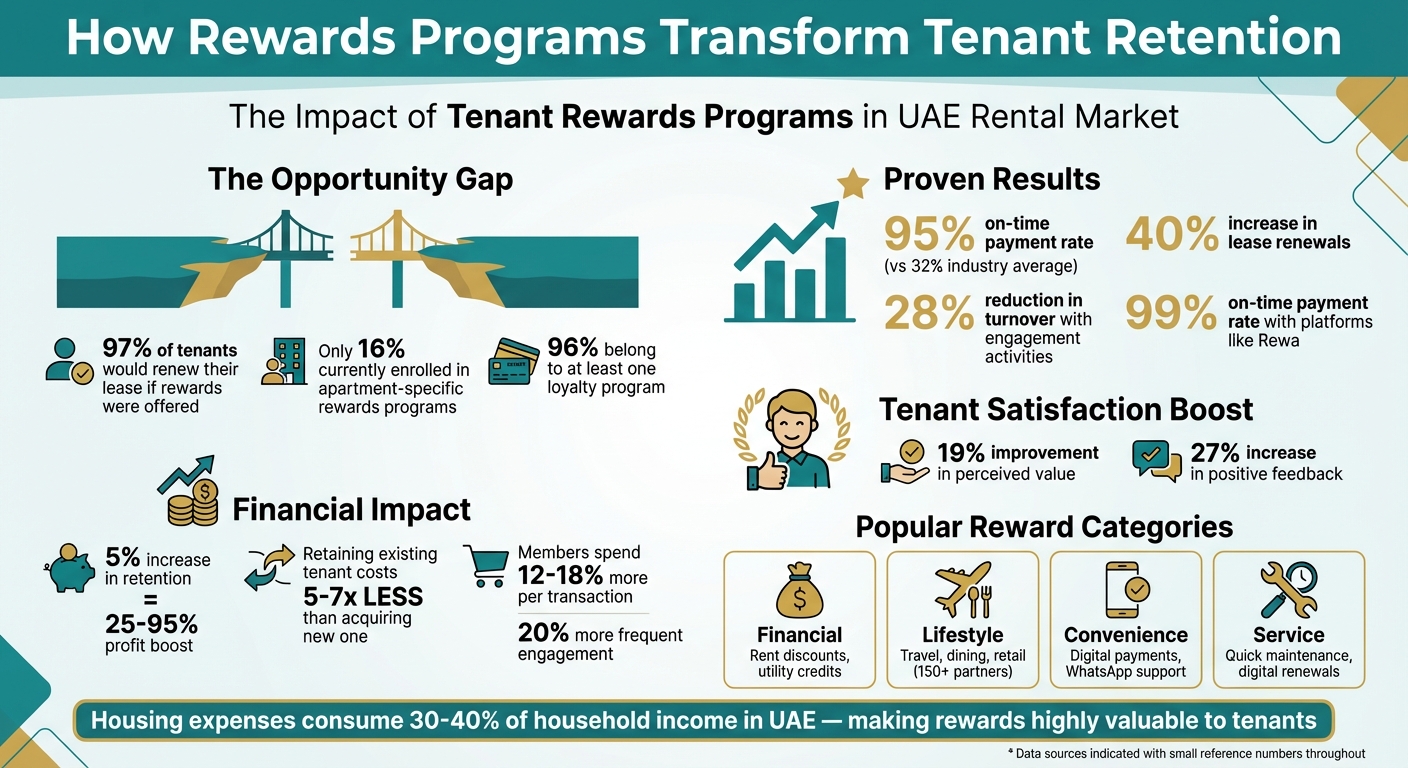
Tenant Rewards Programs Impact: Key Statistics and Benefits for UAE Landlords
How to Create Tenant Loyalty Programs That Keep Your Tenants Happy and Your Properties Full
How Rewards Programs Increase Tenant Retention
In the competitive UAE rental market, rewards programmes are proving to be a powerful tool for tenant retention. By offering tangible benefits for actions like on-time payments and lease renewals, these programmes create a sense of appreciation among tenants. This not only strengthens loyalty but also helps property managers reduce turnover costs and minimise vacancy periods. The real impact, however, lies in the deeper psychological principles at play.
97% of tenants would choose a specific unit and renew their lease if additional benefits were offered by the property management company. Yet, despite this demand, only 16% of tenants are currently part of an apartment-specific rewards programme, even though 96% belong to at least one loyalty programme. This gap offers a unique opportunity for property managers in the UAE to stand out in a crowded market.
Rob Franklin, Senior Vice President and General Manager of Resident Solutions at RealPage, notes: "In today's renter's market, tenants demand enhanced moving assistance, loyalty programmes, and flexible payment options."
This shift reflects tenants' growing expectations for the same level of service they receive from airlines, hotels, and retail brands.
The Psychology Behind Rewards
Rewards programmes tap into key psychological principles that shape tenant behaviour. One of the most influential is reciprocity - when tenants receive meaningful perks, they feel inclined to return the gesture through loyalty and lease renewals. Additionally, tiered reward systems foster a sense of status and belonging, motivating tenants to remain part of the community and strive for higher reward levels.
Financial incentives, such as rewards for on-time payments, create a positive reinforcement loop. This not only encourages consistent payments but also provides landlords with more predictable cash flow. Nearly all tenants agree that property managers should introduce loyalty programmes specifically for timely rental payments. Properties with such programmes report members spending 12% to 18% more per transaction and engaging 20% more frequently than non-members.
The results on tenant retention are striking. A 5% increase in retention can enhance profits by 25% to 95%, and retaining an existing tenant costs five to seven times less than acquiring a new one. Additionally, loyalty programmes improve tenants' perception of value by 19% and boost positive feedback by 27%.
Common Rewards Strategies
To make these psychological principles actionable, rewards programmes in the UAE rental market often combine various incentives to cater to tenant preferences. Points-based systems are a popular choice, allowing tenants to earn rewards for timely rent payments via digital platforms. These points can then be redeemed for a mix of lifestyle and financial benefits.
Lifestyle rewards are especially appealing, with points redeemable for travel, dining, groceries, retail, and more. Many UAE platforms offer redemption options with over 150 local and global partners, giving tenants flexibility in how they use their rewards.
Housing-related incentives also resonate strongly. Tenants can apply earned points towards future rent, utility bills, or even long-term housing goals with specific developers. Since rent is a major expense for UAE residents, these rewards hold significant value.
Another effective approach involves service-based rewards, such as assistance with setting up internet or utilities. These perks address tenant stress directly, as 97% of tenants seek help with services like internet and utility setup. Additionally, offering flexible payment schedules, such as weekly or semi-monthly options, aligns with the preferences of over 90% of renters who favour non-traditional payment methods.
| Reward Category | Specific Examples | Retention Impact |
|---|---|---|
| Financial | Rent discounts, utility credits, housing savings | Lowers housing costs and fosters long-term commitment |
| Lifestyle | Travel, dining, retail, and grocery perks | Enhances daily engagement and perceived value of tenancy |
| Convenience | Digital payments, WhatsApp support | Simplifies administrative tasks and improves tenant experience |
| Service | Quick maintenance, digital lease renewals | Builds trust and satisfaction with property management |
Properties that provide lease renewal incentives can boost retention rates by 40%. Additionally, those introducing loyalty programmes and hosting at least six tenant engagement activities annually report a 28% reduction in turnover. The key lies in tailoring rewards to tenants' actual preferences, ensuring the programme feels personal and relevant rather than one-size-fits-all. This approach directly supports long-term retention, helping property managers build lasting tenant relationships.
Designing Rewards Programs for UAE Tenants
Understanding Tenant Preferences in the UAE
The UAE's rental market caters to a diverse population with varying expectations. Emiratis often prioritise exclusivity and prestige, while expatriates - who make up the majority of tenants - tend to value practical rewards that fit seamlessly into their day-to-day lives.
With housing expenses typically consuming 30% to 40% of household income, tenants are particularly drawn to rewards that provide immediate financial relief. Collaborations with grocery stores, utility companies, and petrol stations can deliver just that. Travel and dining perks also hold strong appeal, with tenants showing interest in both cashback options and lifestyle-focused benefits. Flexibility is key here - some tenants might prefer converting reward points into cashback, while others might opt for perks like hotel stays or airline miles.
"We, as Middle Easterns, are not interested in a brand if it's irrelevant to us. Develop products and activations in line with the local taste and preferences", says Khadija Al Bastaki, Senior Vice President at Dubai Design District (d3).
This wide range of preferences highlights the importance of tailoring rewards to align with local tastes and cultural nuances.
Aligning Rewards with Regional Sensitivities
Cultural awareness plays a critical role in creating successful rewards programmes in the UAE. Across all age groups, modest fashion and lifestyle options resonate deeply, with younger residents (18–34) showing a strong interest in traditional styles. Reward catalogues should reflect this by including halal dining options, modest fashion retailers, and family-friendly experiences.
The UAE's vibrant social calendar also presents opportunities for strategic engagement. Property managers can craft seasonal campaigns around major events like Ramadan, Eid al-Fitr, Eid al-Adha, and Diwali. For instance, offering bonus points for on-time rent payments during these periods or exclusive Iftar vouchers can show cultural sensitivity while boosting participation. Additionally, rewards that go beyond monetary discounts - such as invitations to exclusive cultural events like museum tours or curated brand activations - can create a sense of recognition and deepen tenant loyalty.
"Money is not as big of a differentiator, but being invited to an experience, not because you purchased it, but because you earned it, is much more appealing", notes Rani Ilmi, Founder and CEO of Frame Publicity.
Setting Clear and Achievable Goals
To create an effective rewards programme, property managers need to set clear, measurable goals. Having well-defined objectives ensures the programme stays focused and delivers results. For example, offering lease renewal incentives has been shown to improve tenant retention, providing a concrete way to measure success. Identifying key behaviours - such as on-time payments, lease renewals, and referrals - and assigning straightforward point values helps tenants understand exactly how to earn and redeem rewards.
Platforms like Rewa, which boasts a 99% on-time payment rate, demonstrate how a thoughtfully designed system can encourage consistent tenant behaviour while simplifying operations for landlords. By setting realistic targets and monitoring progress through user-friendly dashboards, property managers can refine their strategies and scale the programme effectively over time.
sbb-itb-80e96b1
Implementing Rewards Programs with Rewa
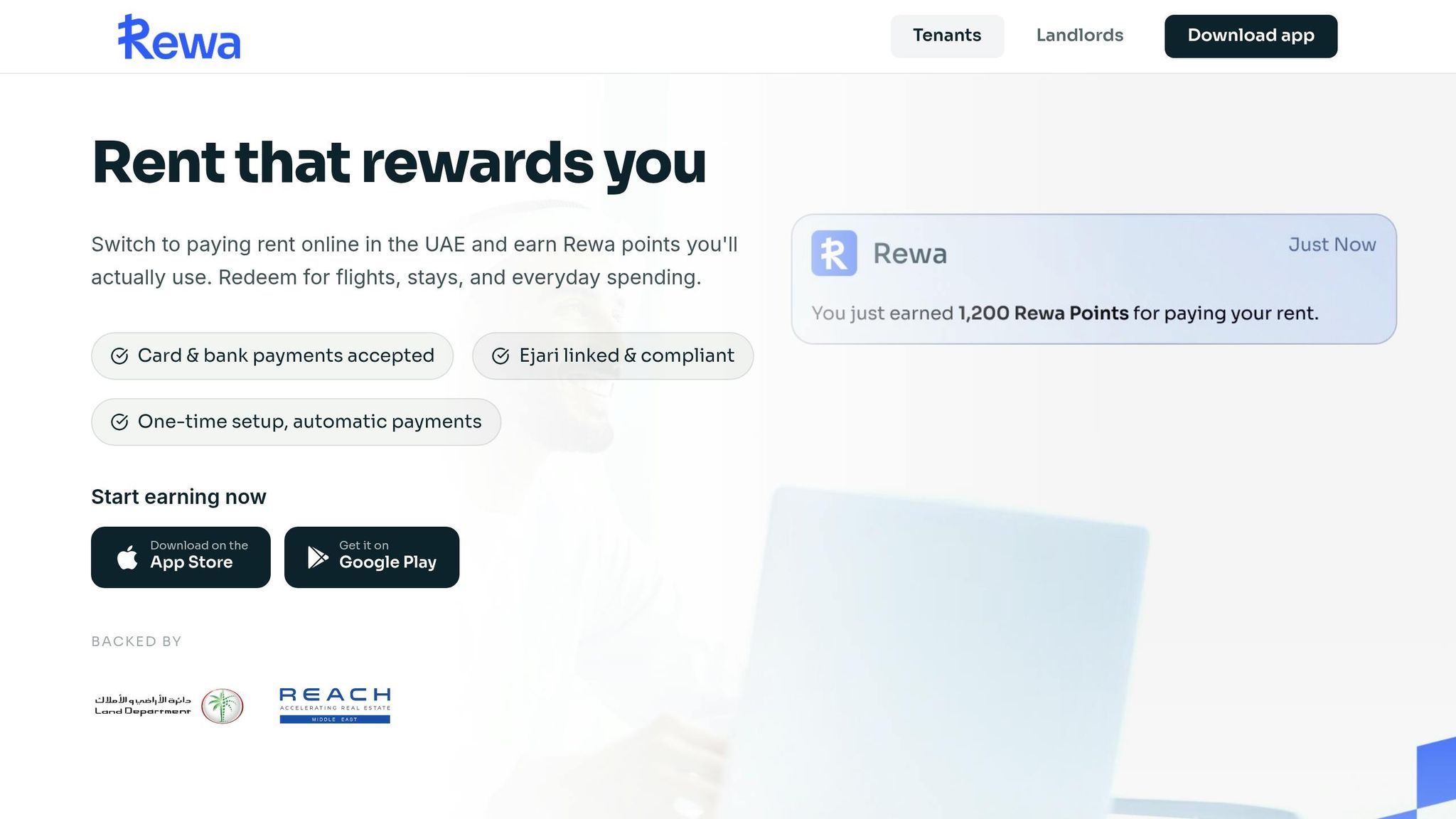
Simplifying Rent Payments with Rewa
Property managers can quickly register their buildings or portfolios on the Rewa Alliance platform, with no setup fees involved. The onboarding process is straightforward and includes compliance checks tailored to UAE regulations. Tenants verify their identity using UAE Pass and link their Ejari contracts, ensuring that every transaction aligns with local regulatory requirements.
Once set up, tenants can use the Rewa app to pay rent via credit card or bank transfer, replacing the traditional cheque-based system. On-time payments automatically earn Rewa Points, turning rent payments into a rewards-based experience. The platform integrates seamlessly with existing UAE rental systems, including DLD and Ejari processes, without requiring changes to lease agreements.
For landlords, this means receiving full rent payments within 1–2 business days, ensuring steady and predictable cash flow. Impressively, Rewa has boosted on-time rent payment rates from an industry average of 32% to an impressive 95%.
Beyond simplifying payments, Rewa transforms rent into an opportunity for tenants to earn meaningful rewards.
Redeemable Rewards for Tenants
Rewa connects tenants with over 150 global and local reward partners across categories like travel, retail, groceries, dining, and lifestyle. Tenants can redeem their points for a variety of rewards, from airline miles and hotel stays to grocery vouchers and dining experiences at their favourite spots.
In some cases, tenants can even apply their points toward future rent, utility bills, or housing-related goals with specific UAE developers. This approach ties responsible tenancy to tangible financial benefits, fostering long-term tenant retention.
"We have applied loyalty models commonly used in aviation and hospitality to the rental sector, aiming to reward tenants while improving cash flow and efficiency for landlords", says Ramzi Mneimneh, Founder of Rewa.
Property managers are encouraged to highlight the wide range of redemption options, from practical rewards to aspirational perks. Studies show that 66% of customers adjust their spending habits to maximise loyalty benefits. This variety of rewards strengthens tenant loyalty and encourages long-term tenancy.
Automated and Secure Payment Processing
Rewa operates under a licensed financial framework, adhering to strict risk management protocols and full regulatory compliance in the UAE. The platform uses bank-grade infrastructure to ensure secure, encrypted, and traceable transactions. This provides landlords with the reliability of cheque-based payments while eliminating the manual hassle.
Automation plays a key role in Rewa’s system. Rent tracking, digital receipts, and reconciliation are all managed through a unified portfolio dashboard. Property managers can easily monitor collection rates, spot late payments early, track renewal patterns, and review monthly trends. With a 98.4% success rate for live transactions, the platform ensures smooth and dependable operations.
Encouraging tenants to enable the auto-pay feature reduces the risk of missed payments and ensures consistent reward accumulation. This automated process not only simplifies operations but also strengthens tenant relationships through hassle-free, reliable transactions.
"Rent should work harder for tenants and smarter for landlords", says Najib Khanafer, Co-founder and CEO of Rewa.
Tracking and Improving Rewards Program Performance
A well-structured rewards programme is only as effective as its ongoing performance tracking. Regular monitoring ensures it stays relevant and impactful.
Measuring Key Performance Indicators (KPIs)
To understand how well a rewards programme is performing, focus on key metrics. Tenant retention and lease renewal rates are crucial indicators, showing the percentage of tenants who choose to stay and renew their contracts. Another vital metric is on-time payments, which help maintain steady cash flow.
Reward redemption rates also offer valuable insights into tenant engagement. For example, Rewa’s network of over 150 local and global partners provides various redemption opportunities, making it easy to track how actively tenants are participating. Additionally, monitoring maintenance resolution speed is essential to prevent delays that could lead to tenant dissatisfaction and turnover.
These metrics are often consolidated in the Rewa dashboard, which also tracks occupancy levels and administrative efficiency. This centralised view helps property managers quickly identify trends and areas that need attention.
Collecting Feedback from Tenants
Direct feedback from tenants is a goldmine for understanding what works and what doesn’t. Mobile apps and web portals not only allow tenants to track their rewards but also provide insights into their preferences and spending habits. Surveys, whether digital or traditional, can uncover specific gaps in the programme - such as a need for more diverse rewards, quicker point accumulation, or additional redemption options.
To make feedback collection easier, automate the process using WhatsApp or tenant portals. This approach can significantly boost response rates. The feedback gathered enables property managers to customise rewards to suit different demographics. For instance, families might appreciate benefits like childcare discounts, while younger tenants might prefer entertainment perks. These insights guide meaningful adjustments to the programme.
Refining and Scaling the Programme
Once the programme is running smoothly, use performance data and tenant feedback to fine-tune it further. Experiment with targeted campaigns, such as seasonal bonuses or tiered rewards, and measure their impact using digital tools.
As tenant expectations evolve, consider adding new features like sustainability-focused rewards or wellness initiatives. These additions can enhance the programme while staying true to its primary goal of improving tenant retention. By continuously monitoring performance and adapting based on feedback, the rewards programme remains effective and aligned with tenant needs.
Conclusion
Tenant retention in the UAE rental market is no longer just about offering competitive rents or upgrading properties. Today, a thoughtfully crafted rewards programme can turn routine rent payments into meaningful experiences, encouraging tenants to stay. By rewarding on-time payments with points that can be redeemed for travel, dining, shopping, or even future rent, property managers create a strong incentive for tenants to remain loyal. This shift represents a fresh approach to tenant engagement, transforming rent into an opportunity for rewards.
Rewa exemplifies this concept by replacing outdated post-dated cheques with smooth digital payment systems. With every transaction, tenants earn Rewa Points, which can be redeemed across a wide network of partners. At the same time, the platform ensures compliance through advanced, automated processes.
"Rent should work harder for tenants and smarter for landlords." - Najib Khanafer, Co-Founder and CEO of Rewa
This move from manual systems to fintech-powered solutions takes inspiration from the successful loyalty strategies seen in industries like aviation and hospitality. By applying these principles to property management, landlords can strengthen tenant relationships, enhance cash flow predictability, and reduce administrative overhead. A well-executed rewards programme not only fosters tenant loyalty but also simplifies property management. With continuous monitoring, tenant feedback, and strategic adjustments - discussed earlier - these programmes can elevate tenant satisfaction and boost property performance throughout the UAE.
FAQs
What should I reward tenants for?
Rewarding tenants for actions that improve their experience and strengthen their connection to the community is a smart way to build loyalty. For instance, you could offer incentives for timely rent payments, maintaining open and respectful communication, or engaging in community events. These rewards might include points that can be redeemed for travel perks, shopping vouchers, or even housing-related benefits. By encouraging these behaviours, you can boost tenant satisfaction and increase the likelihood of long-term retention.
How do I calculate the ROI of a rewards programme?
To figure out the ROI of a rewards programme, start by subtracting the programme's total cost from its net profit. Then, divide that number by the total cost and multiply by 100 to express it as a percentage.
For instance, if you spend AED 10,000 on the programme and it generates AED 15,000 in net benefits, the calculation would look like this: ((15,000 - 10,000) / 10,000) * 100 = 50%. This percentage gives you a clear idea of the programme's profitability and how well it’s performing.
How can I launch a rewards programme without changing lease terms?
Introducing a rewards programme can be a smart way to encourage timely rent payments without changing lease terms. A digital rent payments platform makes this possible by offering incentives for punctual payments. For example, tenants could earn points every time they pay rent on time, which they can later redeem for perks like travel discounts, retail vouchers, or even housing-related benefits.
Here’s how you can set it up:
- Integrate a rewards system with your existing rent payment process to streamline operations.
- Communicate the programme clearly to tenants so they understand how it works and what they can gain.
- Automate tracking and redemption, ensuring the process is smooth and hassle-free for everyone involved.
This approach not only motivates tenants but also enhances their rental experience.