How Digital Payments Transform Rent Collection in UAE
Digital rent platforms are replacing cheques in the UAE, enabling monthly payments, rewards for tenants, and secure automated payouts for landlords.
How Digital Payments Transform Rent Collection in UAE
Paying rent in the UAE is changing fast. Post-dated cheques, once the standard, are being replaced by digital payment platforms like Rewa. These platforms offer tenants monthly payment options via cards or bank transfers, easing financial stress. Landlords benefit too, with automated tracking, on-time payments, and digital receipts.
Here’s why this shift matters:
- Flexible Payments: Tenants can pay monthly, aligning with their income cycles.
- Rewards: Platforms like Rewa offer points redeemable with over 150 partners for timely payments.
- Efficiency for Landlords: Automated processes reduce manual tasks and cash flow issues.
- Support for UAE’s Cashless Strategy: By 2026, 90% of transactions in Dubai are expected to be digital.
The UAE is embracing digital rent solutions, making payments simpler, more secure, and rewarding for everyone involved.
Challenges with Traditional Rent Collection in UAE
Post-Dated Cheques Create Financial Constraints
The reliance on post-dated cheques places a heavy financial burden on both tenants and landlords. Tenants, even those earning monthly salaries, are often required to provide six to twelve months' worth of rent upfront through post-dated cheques. This can mean setting aside substantial amounts - ranging from AED 40,000 to AED 150,000 - just to secure a home. For many families and professionals, maintaining such liquidity is a significant challenge, especially when unexpected events like job loss or unforeseen expenses arise.
"Cheque-based rent remains one of the most persistent friction points in the UAE property market, even as the sector modernises and digitises." - Khaleej Times
On the landlord's side, processing physical cheques adds to their workload with manual tasks that are both time-consuming and inefficient. Compounding the issue, bounced cheques are no longer considered a criminal offence in the UAE, reducing the level of financial security landlords once relied on. These challenges highlight why digital rent collection platforms are becoming increasingly appealing.
Cash Flow Problems and Payment Delays
For tenants, the requirement to pay large lump sums during renewal periods disrupts monthly budgeting. This misalignment often forces residents to dip into their savings or resort to short-term loans to meet rental commitments. Such financial strain makes it difficult to maintain a stable budget throughout the year.
Dubai's Law No. 26 of 2007 sets the default payment plan at four equal instalments unless otherwise agreed upon. However, landlords sometimes push for fewer instalments, and tenants who request more frequent payments may face demands for higher annual rent. Landlords also face their own challenges, such as tracking multiple post-dated cheques across different properties, manually depositing them, and dealing with the risk of bounced payments, all of which can disrupt their cash flow. The lack of flexibility in this system further underscores the need for modern, digital solutions.
Few Payment Options for Tenants
The cheque-based system offers tenants little in the way of alternatives. Many expatriates, who make up a significant portion of the UAE's population, lack sufficient local credit history, making credit card payments less accessible. Moreover, traditional cheques don't offer any additional perks like rewards or loyalty points. Digital platforms like Rewa are stepping in to address these gaps, providing flexible payment methods and even offering rewards, turning rent payments into an opportunity for added value.
sbb-itb-80e96b1
How Digital Platforms Are Changing Rent Collection
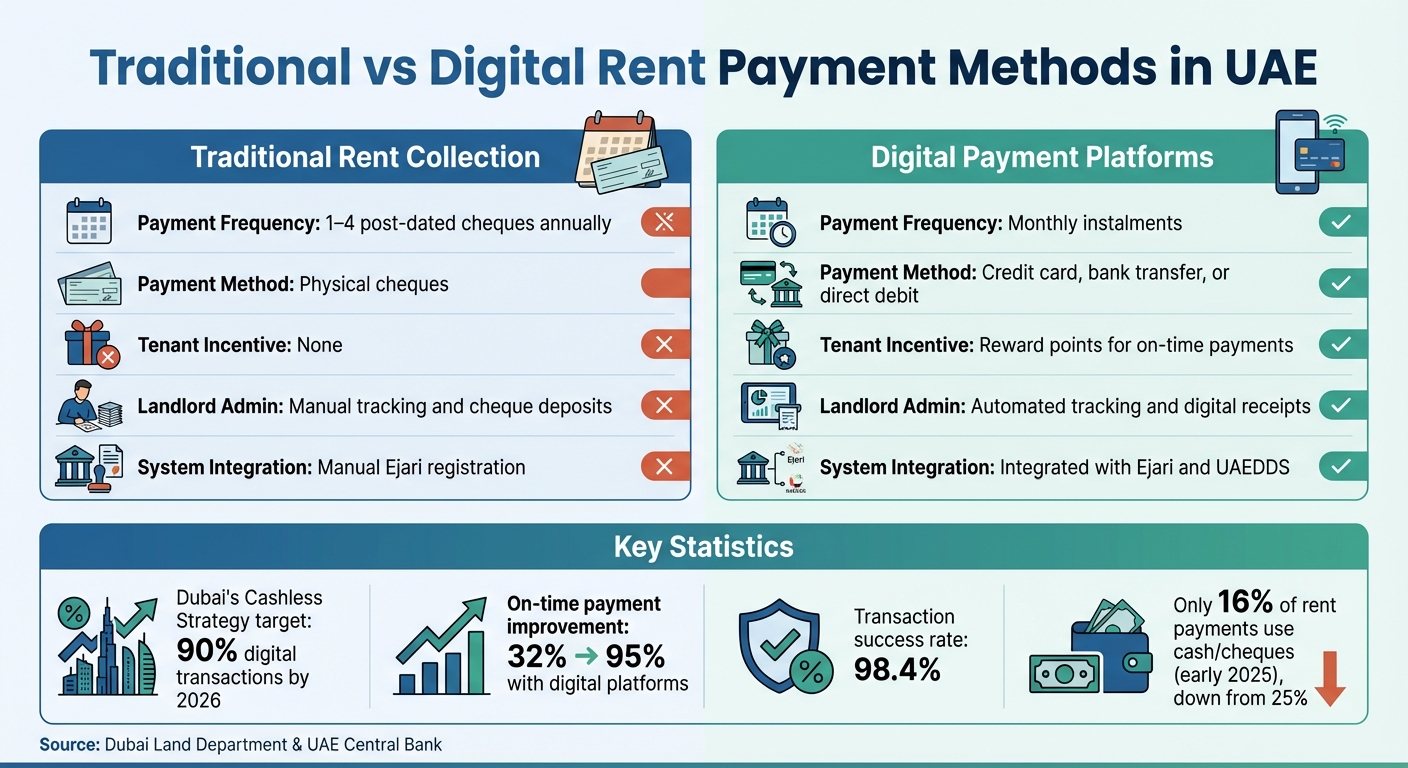
Traditional vs Digital Rent Payment Methods in UAE
Digital platforms are reshaping the way rent is collected, offering more efficient and secure alternatives to outdated methods like post-dated cheques. This shift reflects the broader digital transformation underway in the UAE, aligning with Dubai's Cashless Strategy, which aims for 90% of transactions to be digital by 2026.
Flexible Payment Methods
One of the standout features of digital platforms is their ability to offer flexible payment options. Tenants can now pay rent in monthly instalments via credit card or bank transfer, aligning rent payments with their regular income cycles. This approach significantly reduces the financial strain of large, upfront payments. Some platforms even provide options for landlords to receive the entire annual rent upfront through third-party arrangements, while tenants continue with monthly payments - ensuring convenience for both parties.
Platforms like Rewa take it a step further by introducing loyalty rewards for timely payments. Tenants can earn points redeemable with over 150 partners in sectors such as travel, retail, groceries, and dining. Ramzi Mneimneh, the Founder of Rewa, explains:
"Tenants shouldn't just pay rent, they should get something back for it".
Automated and Secure Payment Processing
Automation has revolutionised rent collection by eliminating the need for manual tasks like managing post-dated cheques, making bank deposits, or issuing paper receipts. Digital platforms now handle these processes seamlessly, offering features like automated tracking, digital receipts, and collection tools that simplify property management.
Security is a top priority for these platforms. They operate under Full Retail Payment Services Licenses issued by the UAE Central Bank, ensuring compliance with national financial regulations. Advanced security measures, such as PCI-compliant infrastructure and automated fund blocking during transactions, provide safeguards comparable to cheques while adding the reliability of digital systems. These features not only streamline operations but also promote greater transparency between tenants and landlords.
| Feature | Traditional Rent Collection | Digital Payment Platforms |
|---|---|---|
| Payment Frequency | 1–4 post-dated cheques annually | Monthly instalments |
| Payment Method | Physical cheques | Credit card, bank transfer, or direct debit |
| Tenant Incentive | None | Reward points for on-time payments |
| Landlord Admin | Manual tracking and cheque deposits | Automated tracking and digital receipts |
| System Integration | Manual Ejari registration | Integrated with Ejari and UAEDDS |
Improved Tenant-Landlord Relations
Digital rent solutions are fostering better relationships between tenants and landlords by simplifying processes and enhancing transparency. Automated payment confirmations and digital receipts minimise disputes over payment status. Reward programmes for on-time payments add a layer of positivity, turning rent payments into an opportunity for added value. This creates a more collaborative and trust-based dynamic between both parties.
With initiatives like the Dubai Land Department's Real Estate Evolution Space (REES) innovation programme backing these advancements, digital rent collection is not just a passing trend. It represents the future of the UAE's rental market, setting new standards for convenience and efficiency.
How Rewa Addresses Rent Collection Challenges
Rewa tackles the long-standing issues in rent collection by offering a modern solution that combines flexible payment options with financial guarantees for landlords. This innovative approach ensures that both tenants and landlords benefit from a more efficient and user-friendly system.
Monthly Payments with Rewards Points
Rewa allows tenants to break their annual rent into manageable monthly instalments. Payments can be made using a credit card, debit card, or bank transfer, completely removing the need for post-dated cheques. On top of this convenience, tenants earn Rewa points - worth up to 2% of their rent - for every on-time payment. These points can be redeemed at a 1:1 ratio for airline miles, hotel loyalty programmes, or with over 150 partners in sectors like travel, dining, fitness, and retail.
Ramzi Mneimneh, Founder of Rewa, highlights the platform's unique value:
"Rent is often the largest recurring expense in people's lives, yet tenants in Dubai have historically received nothing in return and still pay rent through cheques".
While tenants enjoy flexibility and rewards, Rewa also ensures landlords benefit from a secure and efficient payment process.
Guaranteed On-Time Payments for Landlords
Landlords are paid 100% of the rent directly into their bank accounts without any fees. The system includes real-time tracking and digital receipts, simplifying administrative tasks and aligning with Dubai Land Department (DLD) and Ejari requirements. Najib Khanafer, Co-Founder and CEO of Rewa, explains:
"Rent should work harder for tenants and smarter for landlords".
This streamlined process is backed by robust security and compliance measures.
Security and Regulatory Compliance
Rewa uses UAE Pass for secure identity verification, enabling tenants to link their Ejari details automatically. This ensures payment schedules correspond to legal lease agreements and align with the official rental framework set by the DLD. The platform adheres to UAE financial regulations and consumer protection standards, ensuring all transactions are safe and verified. With digital safeguards comparable to traditional post-dated cheques, Rewa offers landlords financial certainty while providing tenants with the convenience of automated, modern payment methods.
How to Start Using Rewa for Rent Collection
Getting started with Rewa is simple for both tenants and landlords. The platform takes care of verification and compliance, so you can transition to digital rent payments without altering your existing lease or Ejari contract.
Creating Your Rewa Account
Tenants can begin by downloading the Rewa app, available for both iOS and Android. Verify your identity using UAE Pass and ensure your digital Ejari contract is ready for an automatic link.
Landlords should register their properties at rewa.rent/properties. Provide the necessary documents and bank details to complete compliance verification. Rewa offers a demo within 24 hours to help you get familiar with the platform. Once everything is set up, you can secure your payment method and start using the service.
Linking Your Payment Method
After your account is verified, choose a credit card or bank account for transactions. Rewa uses licensed, encrypted, bank-grade infrastructure to ensure secure payments. You can enable auto-pay to handle monthly rent payments automatically, reducing delays and earning rewards. Interestingly, landlords using Rewa have reported on-time payment rates jumping from 32% to 95%, with a 98.4% success rate for live transactions. Rent transfers are typically completed within 1–2 business days.
Connecting Rewa to Property Management Systems
Once your payment method is active, you can integrate Rewa with your property management system for seamless operations. Landlords can manage rent collection across their entire portfolio using the Rewa Alliance platform. The onboarding process is quick, taking just minutes, and there are no setup fees. The platform is designed to work effortlessly with UAE rental systems.
Through Rewa’s unified dashboard, you gain real-time insights into payment trends, collection rates, and the overall performance of your portfolio. The platform also automates essential tasks like rent tracking, generating digital receipts, and reconciliation. This eliminates the need for manual paperwork while maintaining the reliability and safeguards of traditional cheque payments.
What's Next for Digital Rent Payments in UAE
The UAE is gearing up for a deeper shift into digital solutions for rent payments, building on recent progress and regulatory changes.
Growing Shift to Digital Payment Methods
The reliance on post-dated cheques is rapidly decreasing in the UAE. By early 2025, only 16% of rent payments were made using cash or cheques, down from 25% the previous year. This aligns with Dubai's Cashless Strategy, which aims to increase digital transactions to 90% by 2026.
Regulatory changes have played a key role in speeding up this transition. Initiatives like the decriminalisation of bounced cheques and the integration of Ejari with the UAE Direct Debit System (UAEDDS) highlight the government's push for digital rent collection. Salima Gutieva, Vice-President and Country Manager for UAE at Visa, commented:
"This represents an opportunity to further drive financial inclusion and digitise commerce in the country. We remain committed to supporting the UAE government's cashless agenda – such as initiatives like Dubai's Cashless Strategy aiming for 90% digital transactions by 2026".
This regulatory backing is complemented by technological advancements, which are set to reshape how rent payments are handled.
Technology Developments in Payment Systems
Technological innovation is making rent payment processes faster and more efficient. For example, the integration of Ejari with UAEDDS allows tenants to schedule rent payments directly from their bank accounts. This eliminates the need for cheques and enables tenants to pay annual rent in monthly instalments without relying on credit cards.
AI technology is also transforming property management. It now handles 60–80% of routine tenant queries, cutting down manual work by up to 40%. Predictive maintenance tools powered by AI are reducing equipment failures by 30–50%. One property operator in Dubai reported an 18% drop in maintenance costs thanks to AI's ability to detect anomalies.
Platforms like Rewa are showcasing these advancements. Supported by Qatar Development Bank and Plug and Play, and part of the Dubai Land Department's Real Estate Evolution Space (REES) programme, Rewa is digitising one of the UAE's last major offline financial processes while adhering to regulatory standards.
Conclusion
Digital payment platforms are reshaping how rent is collected in the UAE, moving away from the reliance on post-dated cheques. By aligning rent payments with monthly salary cycles, tenants gain more flexibility, while landlords benefit from features like automated tracking, digital receipts, and better cash flow predictability.
Rewa is a great example of how technology is enhancing the rental experience. Tenants who pay on time earn Rewa Points, which can be redeemed with over 150 partners across travel, dining, and lifestyle categories. For landlords, the platform ensures guaranteed on-time payments without charging any fees.
The key to successful transformation lies in simplifying processes without adding unnecessary complications. As Gulf News put it, "The success of these new models will depend less on technological novelty than on whether they genuinely reduce friction without introducing new layers of complexity or risk". Rewa’s integration with the Dubai Land Department's REES programme and support from Qatar Development Bank highlights how digital innovation can effectively address challenges in the UAE's rental market.
These platforms also strengthen relationships between tenants and landlords by offering transparent, automated workflows that help minimise disputes. Reward programmes encourage timely payments, and the integration with the UAE Direct Debit System provides additional regulatory safeguards.
"Rent should work harder for tenants and smarter for landlords".
Rewa’s focus on security, flexibility, and efficiency demonstrates how rent collection can evolve to benefit both tenants and landlords alike.
FAQs
Can I use Rewa without changing my lease or Ejari?
Rewa integrates smoothly with your current lease or Ejari setup. It allows for secure digital rent payments and provides automated tracking that complies with DLD/Ejari standards, all without needing to modify your existing agreements.
What happens if a tenant misses a monthly payment on Rewa?
If a tenant misses a monthly payment on Rewa, they can still settle it directly through the platform, which provides automated tracking and secure payment processing. However, if the payment remains unpaid, this could result in rent arrears and may trigger eviction procedures in line with UAE regulations.
Are rent payments on Rewa secure and UAE Central Bank compliant?
Rent payments on Rewa are safe and fully aligned with UAE Central Bank regulations. The platform prioritises secure and reliable transactions, ensuring a hassle-free experience for both tenants and landlords.