Top 7 Benefits of Flexible Rent Payments
Monthly rent via card or bank in the UAE improves cash flow, reduces stress, builds credit history, secures payments, and adds rewards.
Top 7 Benefits of Flexible Rent Payments
Flexible rent payments are transforming how tenants and landlords in the UAE manage rental agreements. Instead of relying on outdated post-dated cheques, platforms like Rewa now allow tenants to pay monthly via credit card or bank transfer. This approach aligns rent with salary cycles, reduces financial stress, and even offers rewards for on-time payments. Here's why this shift matters:
- Improved cash flow: Pay rent monthly instead of large lump sums, making it easier to manage expenses like groceries, fuel, and school fees.
- Earn rewards: Platforms like Rewa let tenants collect points redeemable across 150+ brands, turning rent into a rewarding expense.
- Reduced stress: Smaller, predictable payments align with salary schedules, leaving room for unexpected costs.
- On-time payments for landlords: Automated systems ensure landlords receive rent promptly, with less administrative work.
- Build credit history: Digital rent payments create a trackable financial record, boosting creditworthiness for loans or mortgages.
- Higher tenant retention: Flexible options encourage tenants to renew leases, reducing vacancies for landlords.
- Secure and easy transactions: Digital platforms offer secure, automated payments and compliance with UAE regulations.
This modern system benefits both tenants and landlords, offering convenience, financial stability, and rewards. With platforms like Rewa, managing rent has never been easier.
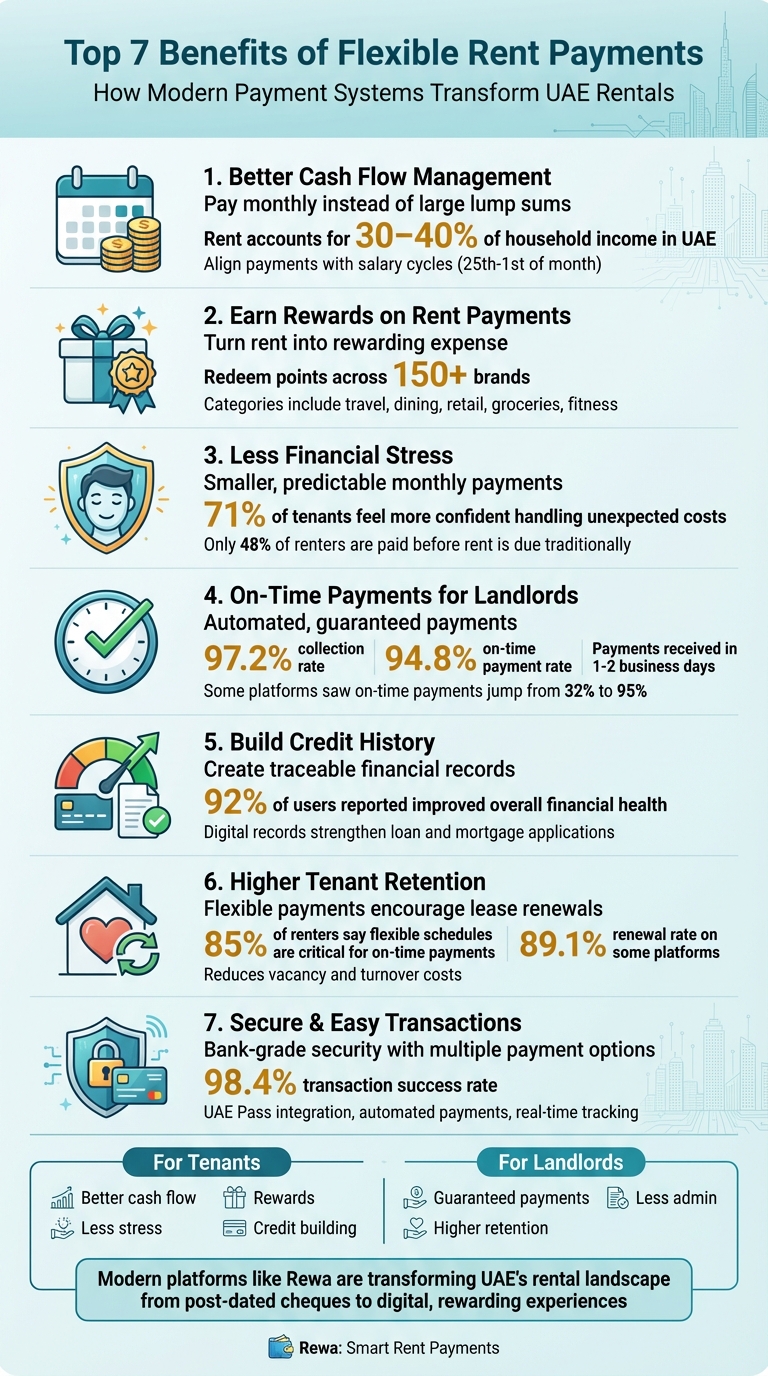
7 Benefits of Flexible Rent Payments in UAE - Infographic
1. Better Cash Flow Management
In the UAE, traditional rental agreements often require tenants to provide multiple post-dated cheques or pay the full rent upfront. While this system benefits landlords by ensuring they receive the full amount early, it can leave tenants with significantly reduced cash flow.
Flexible rent payment plans divide the rent into manageable monthly installments, aligning with salary cycles. This is particularly helpful in the UAE, where many employees are paid between the 25th and the 1st of each month. Instead of draining your account all at once, this system allows you to maintain cash flow for everyday expenses like groceries, fuel, school fees, and unexpected costs. It simplifies monthly budgeting and helps you avoid the stress of large, one-time withdrawals.
When rent takes a big chunk out of your account at the start of the month, it can disrupt your ability to manage other expenses. Flexible payment plans eliminate this strain, giving you the freedom to budget more effectively and even set aside some savings.
With platforms like Rewa, tenants can automate monthly payments via credit card or bank transfer. This ensures landlords receive payments on time while tenants enjoy consistent cash flow and financial peace of mind.
sbb-itb-80e96b1
2. Earn Rewards on Rent Payments
Flexible rent payment platforms are changing the game by adding value to what is typically a major monthly expense. In the UAE, rent often accounts for 30% to 40% of household income. Traditionally, tenants paid via post-dated cheques, receiving nothing in return. But now, platforms like Rewa are turning rent payments into an opportunity to earn rewards.
With Rewa, every on-time rent payment made through credit card or bank transfer earns you Rewa Points. These points can be redeemed with over 150 local and international partners across categories like travel, dining, retail, groceries, and fitness. Instead of just watching your hard-earned dirhams disappear, you’re gaining rewards that can enhance your everyday life.
Rewa applies loyalty models commonly seen in industries like aviation and hospitality to the rental market. You can even use your points towards future rent payments, utility bills, or long-term housing plans with certain UAE developers. If you’re already paying rent with a credit card, this system lets you double up on rewards - earning both Rewa Points and your card’s cashback or loyalty benefits.
For an even smoother experience, set up Autopay through the Rewa app. This ensures you never miss a payment and allows you to consistently rack up rewards, turning a necessary expense into a chance for savings or indulgences - whether that’s a holiday, a special meal, or everyday essentials.
3. Less Financial Stress and More Predictability
In the UAE, the traditional rental system often requires tenants to provide one to four post-dated cheques annually. For those earning monthly salaries, this creates a challenging mismatch, forcing tenants to scramble to gather large sums by specific deadlines.
Switching to flexible payment systems changes the game. Instead of draining savings or relying on credit cards for hefty, infrequent payments, tenants can treat rent as a manageable monthly expense. This approach aligns rent payments with salary schedules, leaving more liquidity for unexpected expenses like medical bills, car repairs, or travel. It’s a practical solution, especially when you consider that only 48% of surveyed renters are paid before their rent is due under the traditional system, and over half receive their income on a biweekly or weekly basis.
The benefits go beyond convenience. Seventy-one percent of tenants report feeling more confident in handling unexpected costs. Smaller, predictable payments ease the stress of saving for a large lump sum, allowing tenants to budget more effectively. This also makes it easier to build an emergency fund without the constant worry of meeting a looming rent deadline. The result? Reduced financial anxiety and a clearer path to managing other obligations.
For freelancers and gig workers - whose incomes can vary significantly - this flexibility is more than just helpful; it’s essential. It provides stability in housing while accommodating fluctuating cash flow, making it a lifeline for many in the UAE's evolving workforce.
4. On-Time Payments Guaranteed for Landlords
Flexible rent payment systems don’t just ease the financial burden on tenants - they also offer key advantages for landlords.
These systems ensure landlords receive the full rent amount directly into their registered bank accounts, often within 1–2 business days. By automating the process, landlords no longer have to deal with the uncertainty or administrative challenges of rent collection. Payments are processed reliably, eliminating delays or partial payments.
In the UAE, digital rental platforms boast impressive performance, with collection rates around 97.2% and on-time payment rates at approximately 94.8%. Some platforms have even seen on-time payments jump from 32% to 95% after adopting these systems. These numbers highlight how much more dependable rent collection becomes for property owners.
When tenants pay through credit cards or bank transfers, landlords receive the full rent on the due date, even if tenants opt for staggered payments across the month. Additionally, identity verification through UAE Pass and Ejari validation ensures all transactions comply with legal requirements. This combination of reliability and compliance makes property management easier and more secure.
Automation also cuts down on administrative tasks. Features like digital receipts, unified dashboards, and real-time tracking replace time-consuming manual processes, such as reconciling payments or making trips to the bank. For landlords managing multiple properties, this streamlined approach offers much-needed clarity and efficiency.
Interestingly, these systems also motivate tenants. By offering rewards points for on-time payments, which can be redeemed for travel, dining, or fitness perks, tenants are encouraged to prioritise rent payments. In fact, 85% of renters say flexible schedules are critical for making payments on time. This reduces the need for landlords to chase late payments, saving time and effort.
5. Build Credit History and Financial Records
For most tenants, rent is the biggest ongoing expense, yet traditionally, these payments did little to contribute to their financial profile. Digital rent platforms are changing the game by creating a traceable payment history that banks and lenders can use to evaluate creditworthiness.
By moving from post-dated cheques to digital payments, tenants gain a clear, verifiable record of their financial habits. This builds on the benefits of better cash flow management, as discussed earlier. When linked with official systems like Ejari and the Dubai Land Department (DLD), these digital records provide proof of regular, on-time payments, which can strengthen applications for loans and mortgage pre-approvals. Lindsey Collins from Dubai Realty Insider highlights this advantage:
"consistent monthly payments create a digital payment record, strengthening financial inclusion by providing banks with a clearer view of a tenant's financial behavior"
This is particularly important in the UAE, where 48% of surveyed renters report receiving their income after their rent is due. Flexible payment options help close this gap by allowing tenants to align rent instalments with their pay schedules. This reduces the risk of late payments, which could harm financial credibility. In fact, 92% of users on flexible rent platforms reported improvements in their overall financial health. By creating a dependable payment routine, tenants not only ease financial pressure but also improve their credit standing.
Digital payments also pave the way for better access to financial services. Many property platforms now include income verification and credit checks, similar to those in mortgage applications. This makes it easier for tenants with strong payment histories to qualify for personal loans or secure lower interest rates. Automated rent tracking builds a trustworthy financial record, offering long-term benefits for tenants seeking improved financial opportunities.
6. Higher Tenant Retention Rates
When tenants are offered flexible payment options instead of being burdened by large upfront costs, they're much more likely to renew their leases. This approach tackles a significant issue: only 48% of surveyed renters receive their income before their rent is due. By aligning rent instalments with tenants' pay cycles, landlords can ease financial stress and boost lease renewals.
In fact, 85% of renters using flexible payment schedules consider this feature crucial for making on-time payments. Some platforms even report renewal rates as high as 89.1%. As Rewa highlights:
"Tenants who benefit from paying on time are more satisfied and more likely to renew, which helps keep vacancy low"
This satisfaction doesn't just benefit tenants - it also brings operational advantages for landlords. Tenant turnover comes with expenses like marketing vacant units, making repairs, and losing income during unoccupied periods. On top of that, digital platforms simplify the process by automating tasks like payment tracking and receipt generation, eliminating the hassle of managing post-dated cheques.
Rewards programmes add another layer of appeal. By offering points that can be redeemed for travel, dining, or even future rent payments, landlords turn rent payments into a more rewarding experience. These added perks create stronger tenant-landlord relationships, complementing the financial stability and streamlined cash flow discussed earlier.
The UAE rental market is particularly ready for this evolution. Ramzi Mneimneh, Founder of Rewa, explains:
"Rent is often the largest recurring expense in people's lives, yet tenants in Dubai have historically received nothing in return... aiming to reward tenants while improving cash flow and efficiency for landlords"
7. Secure and Easy Payment Processing
Relying on traditional post-dated cheques comes with its fair share of risks - lost paperwork, bounced payments, and a lack of transparency being some of the most common issues. These challenges highlight the importance of having robust digital security measures in place.
Modern payment platforms address these concerns with bank-grade infrastructure and advanced encryption protocols to safeguard financial data. Security is further strengthened by secure identity verification processes. For instance, platforms integrate seamlessly with national systems like UAE Pass, ensuring user authentication and compliance with local regulations for every transaction.
Beyond the cash flow and reward benefits mentioned earlier, these platforms also prioritise a smooth payment experience. Tenants can choose from multiple payment methods, including credit cards, debit cards, and bank transfers. Rewa, for example, boasts an impressive 98.4% success rate in live transactions. As Najib Khanafer, Co-founder and CEO of Rewa, explains:
"Our private beta proved the demand for online rent payments and collection. Now we're scaling nationwide and broadening the rewards network. Rent should work harder for tenants and smarter for landlords."
Automation takes convenience a step further. Tenants can set up auto-pay, ensuring their rent is paid on time without any manual effort. Landlords, on the other hand, benefit from instant reconciliation and real-time dashboards that provide a clear view of collections. Even when tenants opt for instalment payments, landlords typically receive the full rent amount in their bank accounts within 1–2 business days.
For landlords, this system reduces administrative hassles while offering complete visibility into payment statuses. Tenants enjoy secure transactions that protect sensitive card details and even earn rewards on what is often their largest monthly expense. This mix of security, convenience, and automation is redefining how rent payments are managed in today's world.
Conclusion
Flexible rent payment systems are reshaping the UAE's rental landscape. Historically, rent payments in the region have relied on post-dated cheques and manual processes, creating inefficiencies for both tenants and landlords. Rewa is stepping in to modernise this process, turning rent payments into a streamlined and rewarding experience for everyone involved.
This transformation benefits the entire rental ecosystem. Tenants gain better control over their cash flow, the chance to earn rewards on one of their biggest monthly expenses, and access to secure, modern payment options. On the other hand, landlords enjoy the assurance of timely payments, automated tracking aligned with Dubai Land Department and Ejari systems, and a significant reduction in administrative tasks. With rewards spanning travel, retail, and dining, Rewa not only meets the practical needs of residents but also adds a layer of convenience and security. Its integration with government-backed initiatives like the Dubai Land Department's Real Estate Evolution Space (REES) ensures compliance with UAE regulations, providing peace of mind for all parties.
FAQs
How do monthly rent payments work with my tenancy contract and Ejari?
In the UAE, monthly rent payments are usually tied to your tenancy contract and Ejari registration. Instead of paying the entire rent upfront, tenants have the option to pay in instalments. Digital platforms play a key role here, offering automated tracking and ensuring compliance with local rental regulations. This system makes managing rent easier while staying aligned with UAE rental laws.
Can I pay rent with a credit card and earn rewards points?
With Rewa, you can pay your rent using a credit card and rack up rewards points in the process. These points can then be redeemed for exciting perks like travel, dining, fitness memberships, and more. Rewa turns rent payments into a hassle-free and rewarding experience.
When will my landlord receive the rent if I pay in instalments?
Your landlord will receive the total rent amount once all your scheduled instalments are completed. These flexible rent payment systems allow tenants to break down payments into smaller, manageable portions while ensuring landlords are paid in full.