How Automated Rent Collection Improves On-Time Payments
Digital rent collection boosts on-time payments, cuts admin work and rewards tenants, improving cash flow for UAE landlords.
How Automated Rent Collection Improves On-Time Payments
Late rent payments are a common issue for UAE landlords, often causing cash flow problems and increasing administrative work. Automated rent collection systems solve this by replacing outdated cheque-based methods with digital solutions.
Here’s why automated systems work better:
- Predictable Payments: Tenants can set up recurring payments, reducing delays.
- Higher On-Time Rates: Auto-pay systems achieve up to 98% on-time payments compared to 75% with cheques.
- Less Admin Work: Automation eliminates manual cheque handling, reminders, and payment tracking.
- Tenant Rewards: Platforms like Rewa incentivize prompt payments by offering reward points redeemable for rent, utilities, or lifestyle perks.
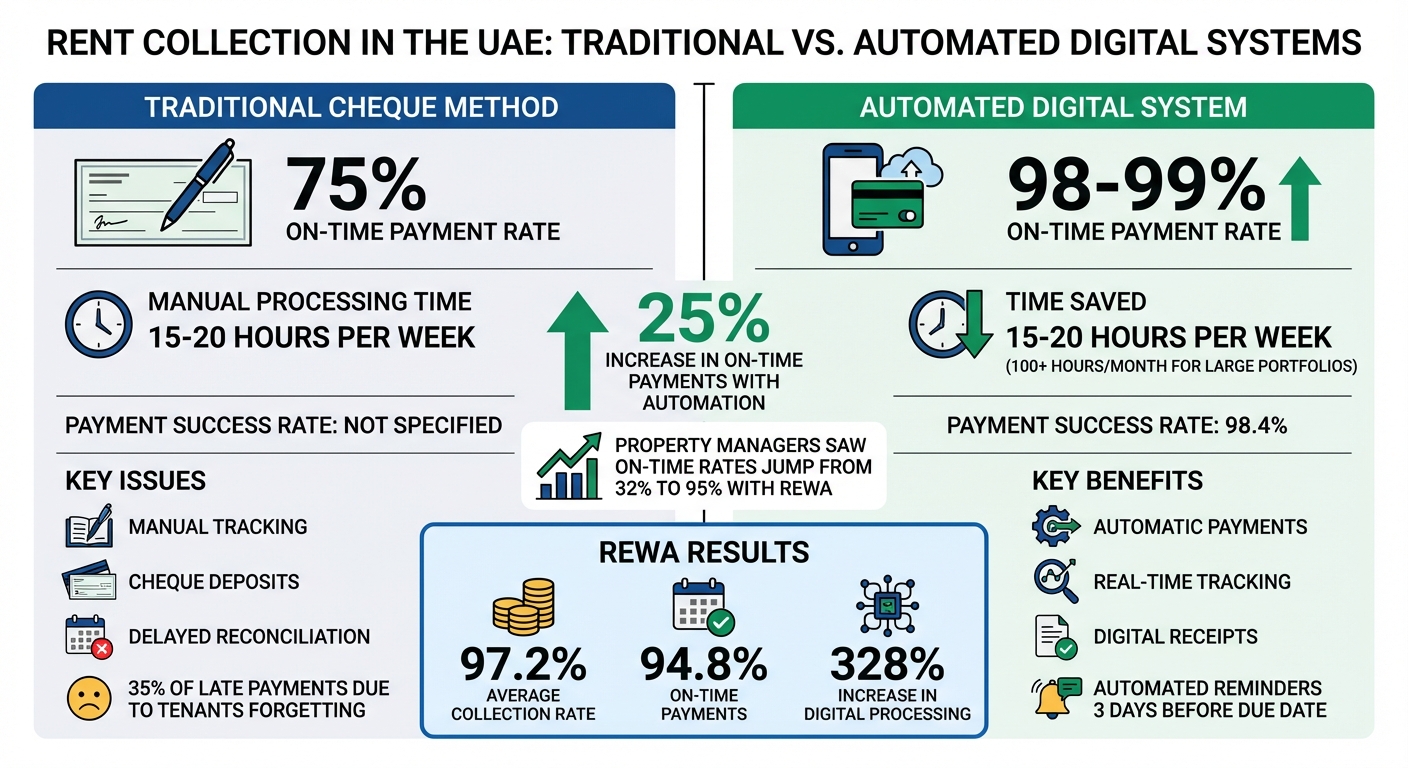
Traditional vs Automated Rent Collection: Payment Rates and Time Savings Comparison
The Problem: Late Rent Payments in the UAE
How Late Payments Affect Landlord Finances
Late rent payments can wreak havoc on a landlord's financial stability in the UAE. When tenants delay or fail to pay, landlords often struggle to meet crucial financial obligations like mortgage instalments, property maintenance, and other recurring expenses. This disruption in cash flow can be particularly stressful, especially when these payments are time-sensitive.
If landlords need to take legal action against non-paying tenants, the costs quickly add up. For instance, eviction proceedings require a fee of 1% of the annual lease amount (capped at AED 5,000), along with an AED 100 process service fee and an additional AED 130 + VAT when claims are registered through Real Estate Services Trustee Centres. On top of these expenses, the eviction process itself can take anywhere from 1 to 3 months, during which landlords often lose rental income with no assurance of recovering it.
Another challenge is that landlords can’t automatically impose late fees unless their tenancy contracts explicitly include this provision. Even when such clauses exist, collecting penalties demands extra paperwork and legal follow-ups. The reliance on tenants paying rent through one to four large post-dated cheques also complicates matters. This arrangement, combined with the mismatch between tenants' monthly salaries and large lump-sum payments, often leads to defaults - particularly during periods of higher personal expenses.
These financial hurdles make it clear that landlords need better tools to manage rent collection more effectively.
Problems with Manual Rent Collection
The issue of late payments is further aggravated by the inefficiencies of manual rent collection. Most landlords in the UAE still depend on post-dated cheques, which introduce a range of logistical headaches. Collecting these cheques, depositing them at the bank, and waiting for them to clear is not only time-consuming but also prone to errors when reconciling payments with individual tenants.
For landlords managing properties manually, the administrative workload increases significantly. Tasks like maintaining records, sending reminders, and chasing late payments often require additional staff, which raises operational costs. Without automated systems, landlords may overlook missed payments, leading to delayed revenue recognition and cash flow issues that might go unnoticed for months.
These inefficiencies are particularly challenging for landlords overseeing multiple properties in cities like Dubai and Abu Dhabi, where the scale of operations magnifies the impact of manual processes. Clearly, a more streamlined and automated approach is needed to address these pain points.
sbb-itb-80e96b1
How Automated Rent Collection Works
Automated rent collection replaces the hassle of post-dated cheques with digital payment systems. Instead of landlords manually depositing cheques and maintaining spreadsheets to track payments, these systems handle everything from processing payments to keeping records in one place. This approach directly tackles the inefficiencies of traditional methods.
Scheduled Automatic Payments
Digital platforms now allow tenants to set up recurring payments, ensuring rent is automatically deducted from their bank accounts or charged to their credit cards on specific dates. This eliminates the common issue of tenants forgetting to pay, which is responsible for 35% of late payments. Tenants also receive a reminder three days before the due date, giving them time to ensure their accounts are funded for the transaction.
For landlords, this shift from cheques to digital payments means more predictable cash flow. Auto-pay systems boast a 98% on-time payment rate, compared to just 75% for traditional mailed cheques.
Rewa's Guaranteed Payment System
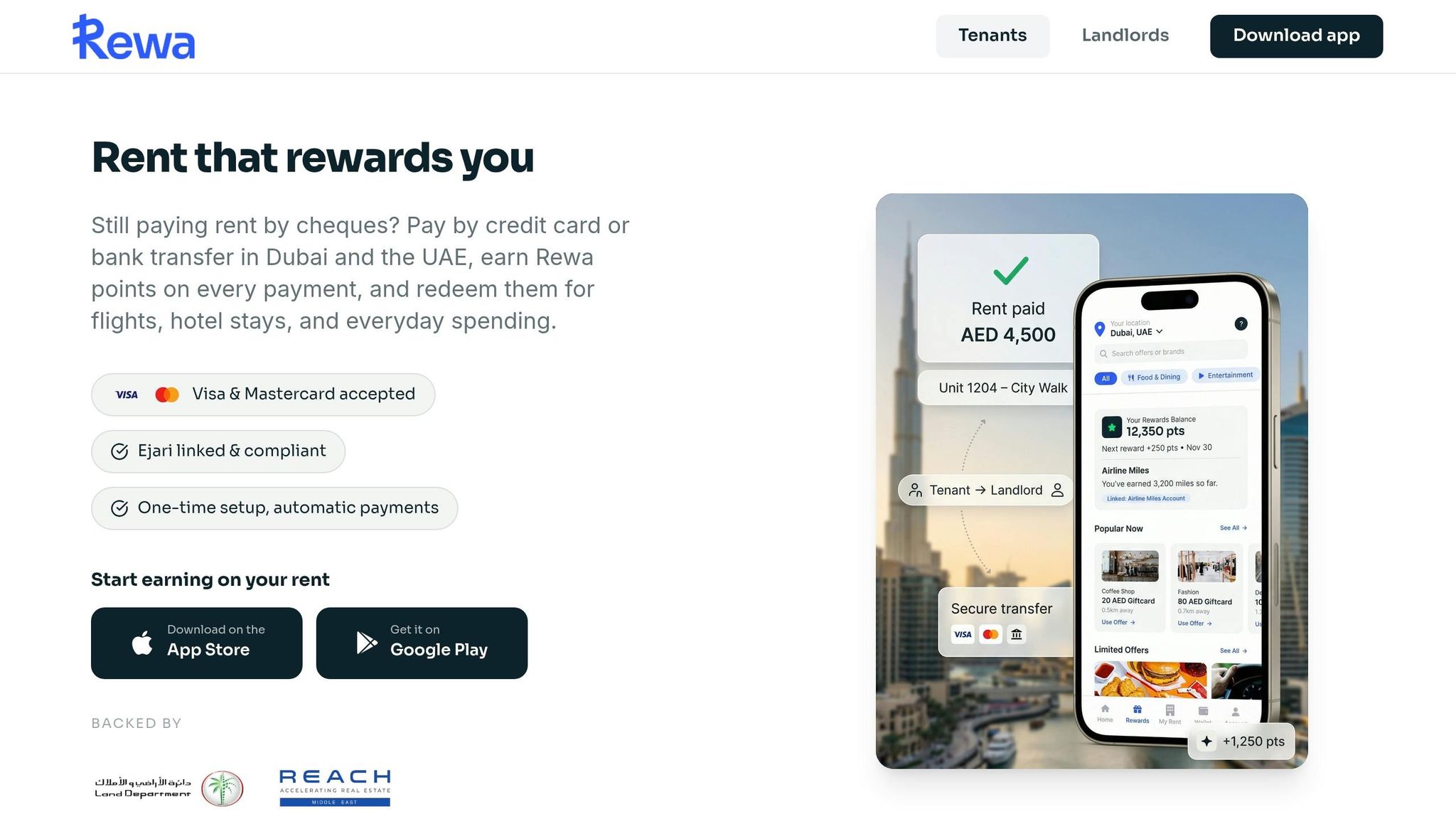
Rewa goes a step further by guaranteeing landlords receive their rent on time, all without setup fees. The platform is integrated with the Dubai Land Department (DLD) and Ejari processes, combining the legal security of traditional cheques with the convenience of digital payments.
Landlords can quickly onboard their entire property portfolio using the Rewa Alliance platform, which is free to set up. The system handles payment tracking automatically, provides digital receipts, and offers a centralised dashboard for real-time updates on payment status. This eliminates the need for landlords to manually follow up on late payments.
"Rent should work harder for tenants and smarter for landlords."
- Najib Khanafer, Co-Founder and CEO of Rewa
Tenant Rewards for On-Time Payments
Rewa adds another layer of value by rewarding tenants for paying on time. Instead of focusing on late fees, the platform encourages prompt payments by offering Rewa Points. These points can be redeemed with over 150 global and local partners, spanning categories like travel, retail, groceries, dining, and lifestyle.
For UAE tenants, this is especially appealing as points can be applied toward future rent, utilities, or even long-term housing goals with select developers. This approach aligns tenant incentives with landlord interests, creating a win-win situation where both parties benefit from timely payments.
"We've applied proven loyalty models from the airline and hotel industries to rent, creating a system that rewards tenants while improving cash flow and efficiency for landlords."
- Ramzi Mneimneh, Founder of Rewa
Benefits for UAE Landlords and Tenants
Switching from manual processes to digital systems offers more than just convenience - it brings measurable advantages for both landlords and tenants.
Higher On-Time Payment Rates
Digital systems, powered by automation, have a noticeable impact on payment punctuality. With features like AI-driven automation and multiple payment options - such as Apple Pay, Google Pay, credit cards, and bank transfers - on-time payment rates climb to 99%. This represents a 25% improvement, supported by a 328% increase in digital processing within the UAE.
Lower Costs and Reduced Administrative Work
By automating processes like cheque handling and payment follow-ups, property management teams save between 15 and 20 man-hours weekly. For larger property portfolios, this translates to over 100 hours saved each month. Real-time reporting and automated reconciliation streamline financial tasks, replacing the labor-intensive process of manually matching bank deposits with tenant records. Instant updates via centralised dashboards not only cut down errors but also make financial management smoother. These efficiencies contribute to better tenant satisfaction while reducing operational costs.
Better Tenant Retention
Rewa's rewards programme offers tenants a compelling reason to stay. By earning rewards points on rent - often the largest recurring expense for UAE residents - tenants can turn their payments into tangible benefits. With over 150 partners providing rewards, tenants gain immediate perks. Additionally, points can be applied toward future rent, utilities, or housing goals with select developers, creating a long-term incentive to stay. This approach aligns the interests of both landlords and tenants, minimising turnover and the associated costs of finding new occupants.
How to Set Up Rewa for Rent Collection
Rewa offers a fast and straightforward way to automate rent collection, with no setup fees involved. Tailored for rental operations in the UAE, the platform aligns with Dubai Land Department and Ejari regulations, bringing a modern touch to outdated processes.
Setting Up Your Rewa Account
Whether you’re a landlord with a single property or managing a large portfolio, you can join the Rewa Alliance. To get started, head over to rewa.rent/properties and register your building or portfolio. During registration, you’ll need to complete UAE compliance verification, which gives you access to a unified dashboard. This dashboard is your central hub for monitoring payments, spotting late payers, and handling automated transactions. Payments are transferred directly to your registered bank account via bank transfer, and Rewa boasts an impressive 98.4% success rate for live transactions.
Adding Tenants to the Rewards Programme
Once your account is set up, onboarding tenants is simple. After registering your property, tenants can download the Rewa app (available on iOS and Android) and authenticate their identity using UAE Pass. They’ll then link their Ejari contract within the app to confirm rental details and activate automated payment tracking. Tenants can select their preferred payment method - credit card, debit card, or bank transfer - and schedule one-time or recurring payments. As an added benefit, tenants earn Rewa points for every on-time payment, which can be redeemed with over 150 global and local partners. Thanks to this rewards system, property managers have seen on-time payment rates increase from 32% to 95%.
Adjusting Payment Schedules and Reminders
Rewa allows you to move away from the traditional 1–4 cheque payment model by offering flexible digital payment schedules, ensuring more predictable cash flow. Payments are processed automatically based on your chosen schedule, and the dashboard provides trend insights to help you spot potential issues early. Digital receipts and automated tracking eliminate the need for manual follow-ups, while cheque safeguards remain in place to ensure security. Landlords using Rewa report an average collection rate of 97.2% and an on-time payment rate of 94.8%. These features simplify rent collection and make the process both secure and efficient.
Conclusion
Late rent payments can be a hassle for UAE landlords, disrupting cash flow and requiring time-consuming manual follow-ups. Automated rent collection offers a solution by replacing outdated cheque processing with seamless digital transactions. This shift not only ensures a steady income stream but also cuts down on administrative tasks.
Rewa adds an extra layer of appeal by rewarding tenants for paying on time. With access to over 150 reward partners, tenants benefit from added value, while landlords enjoy timely payments. This reward system, combined with automated tracking, simplifies the rental process for everyone involved.
The adoption of automation is transforming the rental market in the UAE. Landlords gain instant insights into payment statuses, tenants appreciate flexible payment options and rewards, and compliance becomes more straightforward for both parties.
For landlords and property managers still using traditional methods, transitioning to automated rent collection is a game-changer. It integrates seamlessly with existing systems, offering immediate advantages. As Najib Khanafer, Co-founder and CEO of Rewa, aptly says:
"Rent should work harder for tenants and smarter for landlords".
This approach brings better cash flow, less manual work, and happier tenants, showcasing the practical benefits of automation in the UAE's rental landscape.
FAQs
Is automated rent collection legal with Ejari in Dubai?
Automated rent collection is indeed legal when using Ejari in Dubai. Ejari registration not only makes rental contracts enforceable but also keeps a record of payment details, including those made through digital methods like bank transfers or credit card payments. This system complies with Dubai's regulations, providing landlords with a safe and efficient way to handle rent payments.
What happens if a tenant’s auto-payment fails?
If a tenant’s auto-payment doesn’t go through, automated rent collection systems usually step in with reminders sent before the due date. These systems can also automatically apply late fees or alert the landlord, helping to address the issue promptly. This process supports steady cash flow and motivates tenants to pay on time.
Can I switch from 1–4 cheques to monthly digital rent?
Yes, switching from the traditional 1–4 cheque system to monthly digital rent payments is now possible in the UAE. Rewa offers a secure digital payment platform that works seamlessly with existing rental systems. Tenants can pay their rent using a credit card or bank transfer, with automated payments ensuring ease and consistency for both tenants and landlords.