How Automated Bank Transfers Improve Rent Collection
Automated bank transfers streamline rent collection in the UAE—cutting admin, reducing arrears and providing live payment visibility.
How Automated Bank Transfers Improve Rent Collection
If rent still depends on tenants remembering to pay, delays and admin work are almost guaranteed. In Dubai alone, 1.38 million tenancy contracts were registered in 2025, with a total value of AED 126.4 billion. At that scale, even small payment delays can affect cash flow, reporting, and arrears follow-up.
Here’s the short version: automated bank transfers help landlords get rent on time, cut manual reconciliation, and spot failed payments fast. Instead of waiting for a tenant to make a transfer or hand over a cheque, rent is collected on the due date through a one-time approved setup linked to UAE Pass, Ejari, and the CBUAE Open Finance Framework.
If I had to sum up the article in a few points, it would be this:
- Manual payments often arrive late because the tenant has to remember to act.
- Manual checks take time because someone has to match each payment to the right unit and record it.
- Automated collection runs on schedule and gives landlords a live view of cleared, pending, and failed payments.
- Failed payments show up at once, so arrears do not sit hidden for days or weeks.
- Tenants approve the setup once, then payments can repeat without cheques or repeated bank transfers.
- Security checks matter: identity, tenancy proof, payment consent, and landlord onboarding all need to be in place.
- Both sides gain: landlords get steadier cash flow, while tenants get a simpler way to pay and, in Rewa’s case, reward points for on-time rent.
A quick side-by-side view makes the difference clear:
| Area | Manual transfers / cheques | Automated bank transfers |
|---|---|---|
| Payment timing | Depends on tenant action | Collected on due date |
| Arrears risk | Higher | Lower |
| Admin work | More reminders and manual checks | Less follow-up and fewer manual checks |
| Payment visibility | Split across records and bank statements | One dashboard view |
| Failed payment handling | Often found later | Flagged at once |
The main point is simple: when rent collection is automated, payments are easier to track, cash flow is easier to plan, and property teams spend less time chasing money.
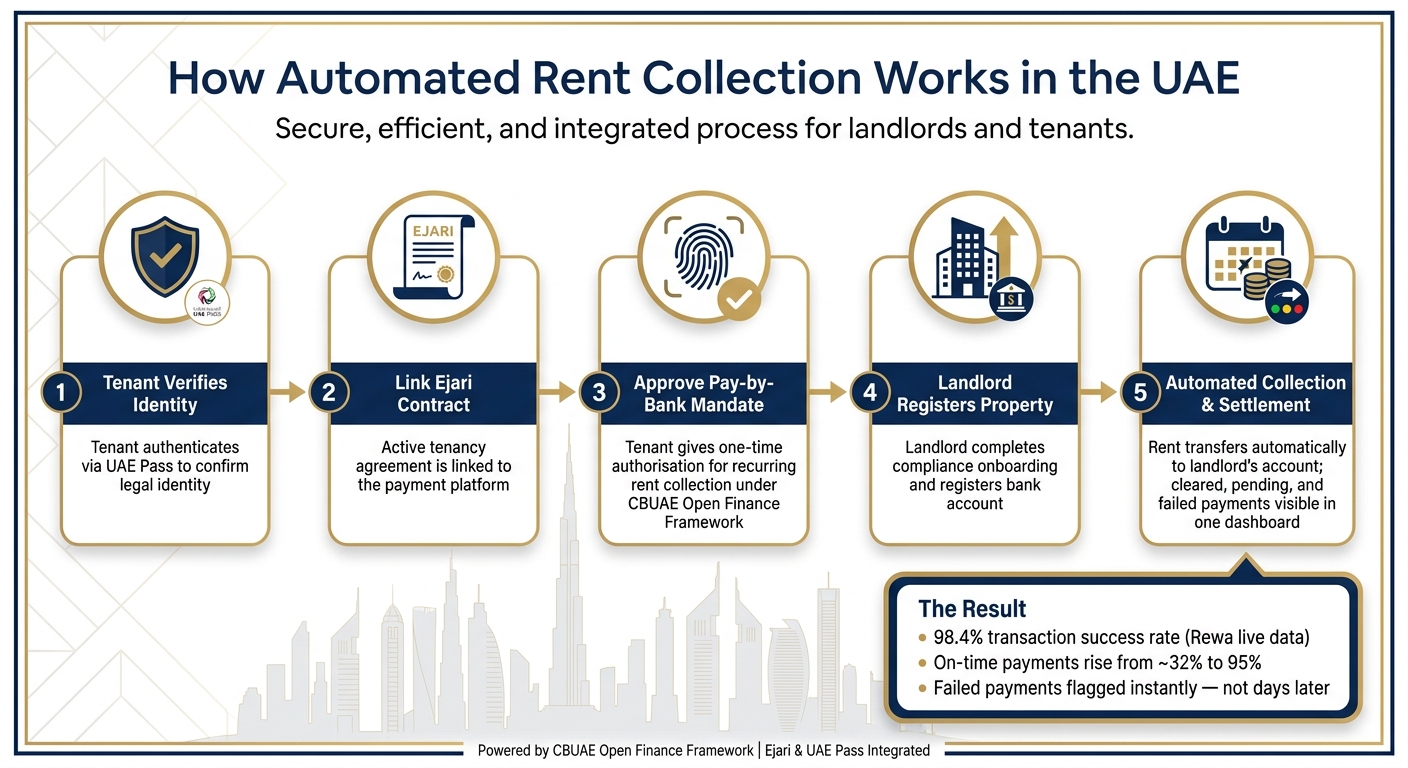
How Automated Rent Collection Works in the UAE: Step-by-Step
2. How automated bank transfers work for rent in the UAE
In the UAE, automated rent collection begins with tenant checks and a bank-approved recurring payment setup.
Tenant authorisation and recurring payment setup
The tenant confirms their identity with UAE Pass, links the Ejari contract, and gives a one-time Pay-by-bank mandate for recurring rent collection. This process uses the Central Bank of the UAE (CBUAE) Open Finance Framework, which supports secure, direct bank-to-bank transfers.
In June 2026, Rewa partnered with Spare, an Open Finance provider, to roll out this Pay-by-bank rental model in Dubai. The aim is simple: make rent payments clearer and easier to handle.
After the tenant gives approval, the rent can be collected each month with little manual work.
Scheduled collection, tracking, and settlement
On the due date, the system collects the rent automatically and sends it straight to the landlord’s bank account, with no fees for landlords. Landlords and property managers can view cleared, pending, and failed payments in one dashboard.
That means no more jumping between records to match payments across multiple units or properties.
What happens if a payment fails
If a payment fails, the tenant gets an automatic reminder, and the landlord can see the failed payment at once. So instead of becoming a hidden shortfall, the issue is flagged early and can be dealt with fast.
Rewa reports a 98.4% success rate for live transactions, with payment safeguards aligned with Dubai Land Department and Ejari processes.
That’s the part that helps cut arrears and reduce admin work.
sbb-itb-80e96b1
3. What landlords and tenants gain from automated transfers
More predictable cash flow and fewer arrears
When rent moves automatically, cash flow gets a lot easier to forecast. Payments land on schedule, which helps reduce arrears and gives landlords a steadier income stream.
That kind of consistency matters even more when you're managing several units across Dubai's rental market. Instead of guessing when payments will come in, landlords can plan with more confidence.
Less admin work for property teams
Manual rent collection often turns into a cycle of small, repetitive tasks. Teams check bank statements, match payments to units, and chase missing records.
Automation removes much of that legwork. Automated collection cuts down manual statement checks and reconciliation across single units or large portfolios. So property teams spend less time buried in payment admin and more time looking after the portfolio itself.
Landlord benefits vs tenant benefits
Automated transfers help both sides of the tenancy. For landlords, the big wins are steadier cash flow and less admin. For tenants, paying rent becomes simpler, with an extra perk for paying on time.
With Rewa, tenants earn Rewa Points for on-time payments and can redeem them for travel, dining, groceries, or future rent and utilities.
| Benefit Category | Landlord Benefits | Tenant Benefits |
|---|---|---|
| Convenience | Automated reconciliation and zero manual follow-ups | One-time setup; no cheques to manage |
| Visibility | Clear payment status across the portfolio | Digital payment history and in-app reminders |
| Financial Value | Predictable cash flow and no collection fees | Earn Rewa Points for on-time payments |
| Security | Aligned with DLD and Ejari requirements, with bank-grade encryption | Secure authentication via UAE Pass; no shared login details |
These gains rely on secure consent, identity checks, and clean payment records.
4. What to set up for secure and reliable automated collection
Once the payment flow is live, the next job is security and control.
Consent, identity checks, and secure processing
Before any automated transfer can run, four pieces need to be in place: confirmed tenant identity, a valid tenancy agreement, clear payment authorisation, and landlord onboarding.
Tenants verify their identity through UAE Pass, link their active Ejari contract to the payment platform, and approve recurring payments through a Pay by Bank flow under the Central Bank of the UAE (CBUAE) Open Finance Framework. Landlords then complete compliance onboarding to register the property or portfolio before collection starts.
| Requirement | What It Covers | How It's Verified |
|---|---|---|
| Tenant Identity | Confirms the legal identity of the payer | UAE Pass Authentication |
| Tenancy Proof | Validates the rental agreement details | Ejari Contract Linking |
| Payment Consent | Authorisation for automated bank withdrawal | Open Finance "Pay by Bank" |
| Landlord Setup | Registration of the property or portfolio and landlord bank account | Compliance onboarding |
This setup links each payment to a verified tenant and a live Ejari contract, while keeping bank details private.
System integration and payment records
Getting the consent flow right is only one side of the setup. The other side is making sure payment data moves cleanly into the systems you already use.
When the platform connects directly with property management and finance systems, receipts and ledgers update in real time. That means less manual reconciliation, faster audits, and rent records that stay current without extra admin work.
Using Rewa for automated rent collection
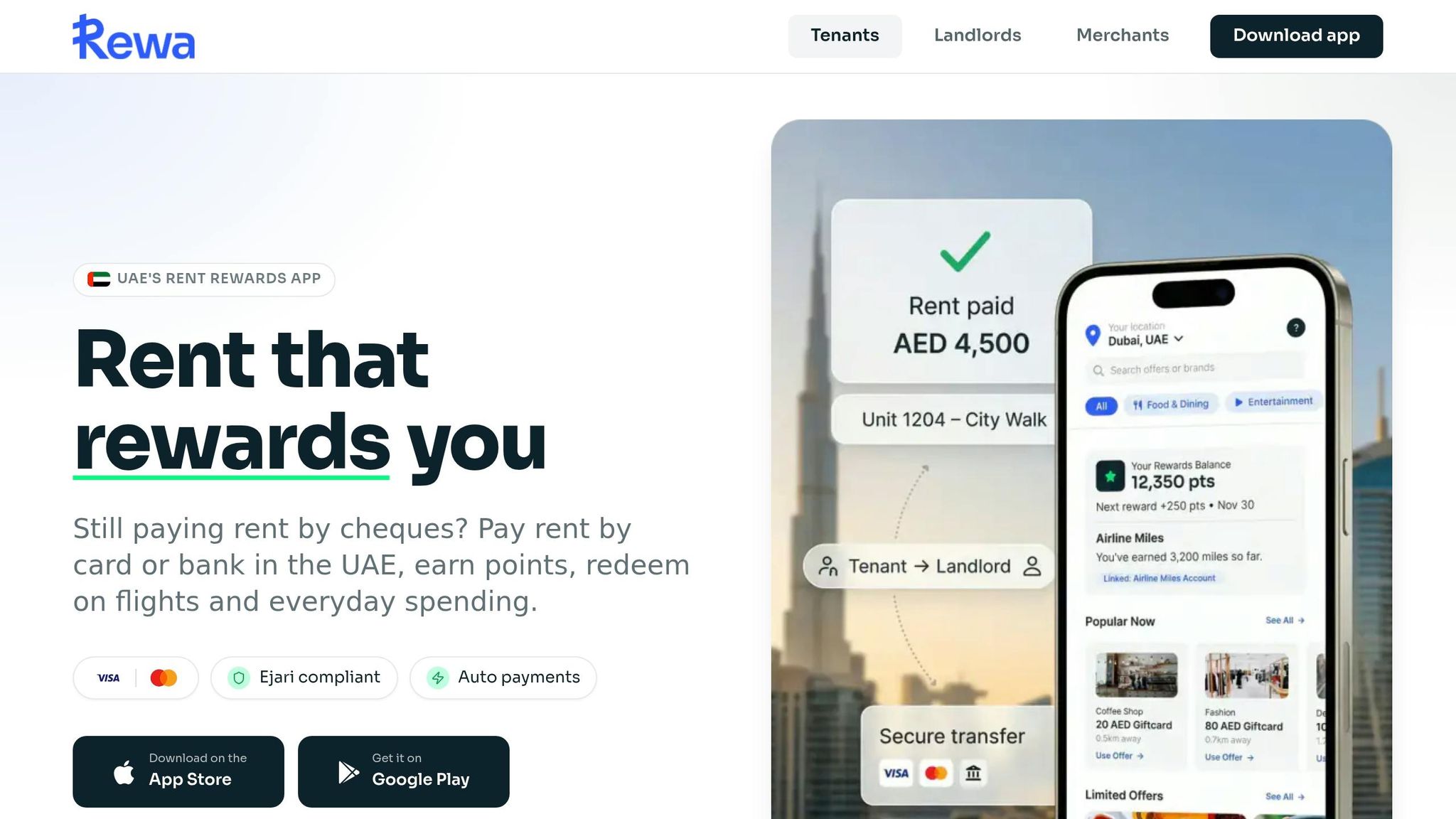
Rewa supports secure automated rent collection and identity checks. Tenants verify themselves with UAE Pass, link an active Ejari contract, and approve recurring payments through a pay-by-bank flow under the CBUAE Open Finance Framework. Landlords complete compliance onboarding, and then payments and records update automatically.
5. Conclusion: why automation improves rent collection
Manual rent collection often leads to late payments, messy records, and the same admin tasks over and over. Automated bank transfers help keep payments on time, update records in real time, and cut down manual follow-up in a big way.
That kind of shift shows up in payment results. Rewa reports that automated collection can increase on-time rent payment rates from around 32% to 95%.
For landlords in the UAE, that means a cleaner and more reliable rent cycle. In the UAE, Rewa combines identity-verified pay-by-bank collection with automated settlement and tenant rewards. The result is more predictable rent collection for landlords and a simpler payment experience for tenants.
FAQs
Do tenants need a UAE bank account?
Yes. Tenants can pay rent through Rewa from a UAE bank account using a secure, regulated pay-by-bank connection.
Rewa uses the Central Bank of the UAE’s Open Finance Framework to support direct, automated bank payments. That means no paper cheques and no manual bank transfers. Tenants can also choose to pay by credit card.
Can automated rent collection work for multiple properties?
Yes, automated rent collection is built to support multiple properties.
With Rewa, landlords and property managers can track payments and handle collection workflows across an entire portfolio from one secure dashboard. That means less jumping between records, fewer manual check-ins, and a much clearer view of what’s been paid and what still needs attention.
It also gives you centralised visibility and digital receipts, so it’s easier to monitor collection status across multiple units without manual follow-ups.
What happens if a tenant changes bank accounts?
If a tenant changes bank accounts, they can update their bank details directly in the Rewa app.
That makes it easier to keep payments on time. Tenants can also manage their payment method, check payment history, and get notifications, without dealing with manual transfers or paper cheques.