How to Automate Rent Collection in UAE Properties
Step-by-step guide to digitise rent collection in the UAE: organise records, choose compliant platforms, automate reminders, track payments and manage late fees.
How to Automate Rent Collection in UAE Properties
Automating rent collection in the UAE eliminates the hassles of post-dated cheques and manual processes, offering a faster, more reliable way to manage payments. With tools like Rewa, landlords and tenants benefit from secure digital payments, automated reminders, and real-time tracking, all while staying compliant with UAE regulations like Ejari registration. Here's why automation is the smarter choice:
- For Landlords: Save time, ensure timely payments, reduce legal risks from bounced cheques, and improve financial management.
- For Tenants: Pay conveniently online, avoid bank visits, and enjoy added perks like rewards for on-time payments.
- Compliance: Align with UAE laws, including data protection and tenancy regulations, while integrating with systems like Ejari and Tasdeeq.
Switching to automation not only simplifies rent collection but also improves tenant satisfaction and strengthens cash flow. Platforms like Rewa make the transition easy, offering features like bilingual portals, mobile access, and secure transactions. Start by organizing your records, setting clear payment schedules, and choosing a reliable platform to future-proof your property management.
Preparing Your Rent Portfolio for Automation
Before diving into automating your rent collection process, it’s crucial to get your records in order. Clear documentation and a solid understanding of your current system will help you identify areas that need improvement.
Audit Your Current Rent Collection Process
Start by examining how you currently handle rent collection. Go through your financial records, reconciliations, and controls to ensure everything complies with local regulations. This step can help pinpoint inefficiencies in your process.
For example, if you notice frequent late payments, this could indicate that automation might help streamline follow-ups. Also, take a close look at your tenancy agreements - unclear terms or incomplete documentation are common causes of rental disputes in Dubai.
If you’re managing multiple properties, your Chart of Accounts should be customised for UAE property management. This includes setting up separate accounts for trust funds, distinguishing VAT-related management fees, and tracking specific charges like DEWA and chiller fees. Given the RERA rules, trust accounting requirements, and VAT implications in the UAE, specialised accounting knowledge is necessary here.
Information to Collect Before Automating
Automation systems are only as good as the data you feed them. To ensure smooth implementation, gather the following details:
- Tenant Information: Full names, Emirates IDs, phone numbers, and email addresses. This is essential for communication and legal compliance.
- Tenancy Contracts: Each property should have a signed written contract outlining lease terms, rent amounts, payment frequency (monthly, quarterly, or annually), and payment methods. Make sure all contracts are registered with Ejari - a legal requirement in Dubai.
- Security Deposits: Record the deposit amount, the date it was received, and the conditions for its return or deductions.
- Rent Payment History: Maintain a detailed record of due dates, payment amounts, late payments, and any notifications sent for non-payment.
- Utility and Fees Responsibility: Document who is responsible for paying charges like DEWA and the Dubai housing fee.
- Property Details: Keep track of property addresses, unit numbers, types (apartment, villa, commercial), and tenancy purposes. Also, log maintenance requests, repairs, and significant tenant communications.
Here’s a quick breakdown:
| Information Category | Specific Data Points | UAE Context/Requirement |
|---|---|---|
| Tenant Details | Full Name, Emirates ID, Contact Information | Required for legal contracts and communication |
| Tenancy Contract | Written Contract, Lease Term, Tenancy Purpose | Must be registered with Ejari for legal validity in Dubai |
| Ejari Registration | Ejari Certificate/Registration Details | Mandatory for all tenancy agreements in Dubai |
| Financials | Rent Amount, Payment Frequency, Payment Method, Security Deposit, Rent Payment History | Includes records of late payments and advance payments |
| Property Details | Property Description, Owner Name, Amenities Included | Helps clearly identify the leased asset |
| Responsibilities | Maintenance/Repair Duties, Utility Payment Responsibility | Landlord covers major repairs; tenants handle routine maintenance/utilities |
UAE-Specific Decisions for Rent Automation
Once your data is organised, align your automation setup with UAE tenancy regulations. One key decision is your rent payment schedule. While annual payments via post-dated cheques have been the norm, automation makes it easier to offer flexible options like monthly or quarterly payments, which can benefit both landlords and tenants.
Set clear rules for handling late payments. In the UAE, landlords can issue a 30-day notice for non-payment. Additionally, keep statutory requirements in mind: a 90-day notice is needed to amend contract terms or decline lease renewal, while certain eviction grounds require 12 months' notice. Your automation system should be set up to track these deadlines and send timely reminders.
Finally, ensure compliance with UAE data protection and payment regulations. Obtain explicit consent from tenants before processing their data, and only collect the information necessary for rent collection. If you’re considering digital payment tokens, make sure your payment service provider is licensed by the Central Bank of UAE. The CBUAE actively supports electronic payments through its National Payment Systems Strategy, so staying compliant is non-negotiable.
Setting Up Digital Rent Collection Tools
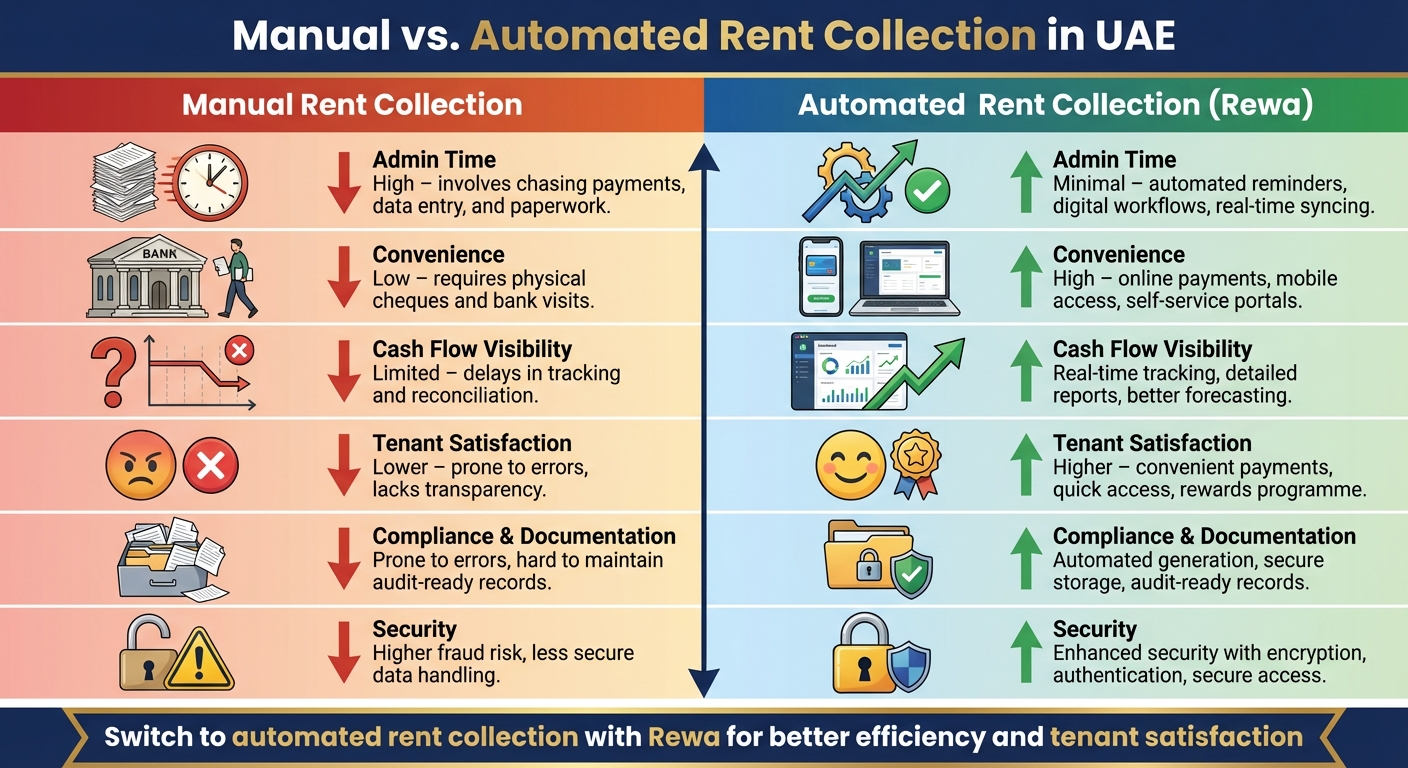
Manual vs Automated Rent Collection in UAE: Key Differences
Core Features of Rent Automation Tools
Rent automation platforms simplify rent collection by reducing manual effort and ensuring both landlords and tenants stay informed. Features like automated payment schedules allow recurring rent charges - whether monthly, quarterly, or annually - and send automatic payment reminders. Real-time tracking provides instant updates on payment statuses, while digital receipts are generated for every transaction.
In the UAE, these platforms must cater to the local market by offering bilingual portals (English and Arabic) and integrating with government systems such as DARI, Tamm, and ADREC. Mobile accessibility is equally crucial, especially in dynamic cities like Dubai and Abu Dhabi, where tenants and landlords often need to manage payments on the go. Security is a top priority, with data encryption, strong user authentication, and compliance with the UAE's Personal Data Protection Law ensuring sensitive information remains protected.
Currently, more than 70% of UAE-based companies utilise digital tools for rent collection, and the property management software market is expected to grow from USD 64 million in 2023 to nearly USD 174 million by 2030. This upward trend underscores the importance of automation for staying competitive in the region.
Now, let’s explore how to implement these features step-by-step using Rewa.
How to Set Up Rent Automation with Rewa
To get started, create a landlord account on Rewa and upload your property portfolio details, including addresses, unit numbers, and tenancy contracts. Next, input tenant information, such as names, Emirates IDs, phone numbers, and email addresses, and assign each tenant to their respective unit.
Once the tenant data is in place, set up payment schedules aligned with your tenancy agreements. Whether rent is collected monthly, quarterly, or annually, Rewa automates the entire process. Tenants can choose to pay via credit card or bank transfer, and landlords benefit from guaranteed on-time payments with no additional fees. Rewa also handles payment reminders, notifying tenants before their rent is due and sending follow-ups for late payments. The platform’s security features ensure all transactions are protected, and its integration with property management systems keeps your financial data seamlessly synchronised.
An added perk? Rewa offers tenants rewards points for each rent payment, which can be redeemed for travel, dining, and fitness activities. This incentive not only enhances the tenant experience but can also boost retention rates.
By streamlining rent collection, Rewa combines efficiency with tenant satisfaction, making it a valuable tool for landlords.
Manual vs. Automated Rent Collection
The differences between manual and automated rent collection highlight why automation is the smarter choice. The table below breaks down the advantages of automation with Rewa compared to traditional methods like cheques or bank transfers:
| Aspect | Manual Cheques/Bank Transfers | Automated Collection with Rewa |
|---|---|---|
| Admin Time | High – involves chasing payments, data entry, and paperwork | Minimal – automated reminders, digital workflows, and real-time syncing |
| Convenience | Low – requires physical cheques and bank visits | High – online payments, mobile access, and self-service portals |
| Cash Flow Visibility | Limited – delays in tracking and reconciliation | Real-time tracking, detailed financial reports, and better forecasting |
| Tenant Satisfaction | Lower – prone to errors and lacks transparency | Higher – convenient payment options, quick access to information, and rewards programme |
| Compliance & Documentation | Prone to errors and hard to maintain audit-ready records | Automated document generation, secure storage, and audit-ready records |
| Security | Higher fraud risk and less secure data handling | Enhanced security with encryption, strong authentication, and secure access controls |
Switching to automation not only saves time but also improves financial tracking, tenant satisfaction, and overall security - making it a win-win for landlords and tenants alike.
Managing Reminders, Tracking, and Late Payments
Setting Up Reminder Schedules
Automated reminders are a reliable way to reduce late payments and maintain a steady cash flow. Schedule reminders for a few days before the due date and again on the actual due date. If your lease agreement includes a grace period, add another reminder once that period ends.
Keep these reminders short and to the point. Include essential details like the due date, payment link, and tenant identifier. For instance: "Hi Ahmed, your rent of AED 5,000 for Unit 302 is due on 1 January 2026. Click here to pay securely. Thank you!". In the UAE's diverse environment, offering reminders in both English and Arabic can make communication clearer.
The beauty of automation is that it takes care of this process without requiring manual effort. As Stessa.com highlights:
Sending a rent reminder text is an easy way to boost your monthly cash flow and reduce the stress of chasing down late payments.
If a tenant doesn’t respond to automated reminders, consider following up with a phone call or email to keep communication open.
Monitoring Payments and Generating Reports
A real-time dashboard simplifies payment tracking, letting you see which payments have been received, which are still pending, and which are overdue - all in one place.
Exporting regular AED reports is a smart way to analyse payment trends and address potential issues early. These reports are especially handy during tax season, as they make record-keeping much easier.
Once you’ve established a clear system for tracking payments, you’ll be better equipped to handle overdue payments with a structured plan.
Handling Late Payments and Escalations
With real-time monitoring in place, managing overdue payments becomes more straightforward. Automated systems can handle follow-ups, reducing the discomfort of personal confrontations. You can also configure these systems to apply late fees automatically, as outlined in your lease agreement, ensuring consistent enforcement. Start by contacting the tenant to understand their situation.
If the tenant still doesn’t pay, follow a structured escalation process. Begin by sending a formal notice that references the relevant lease terms and aligns with RERA guidelines. If direct discussions fail, you can escalate the issue by filing a formal complaint with the Dubai Rental Dispute Settlement Centre (RDC). The RDC is known for its efficiency, resolving 90% of cases within 60 days. In the second quarter of 2025 alone, the RDC finalised 443 reconciliation agreements worth AED 190.7 million, with an average settlement time of just six days.
Always document all communications and receipts to support your case in any dispute resolution. If eviction becomes necessary due to non-payment, you’ll need to provide a 12-month notice through a Notary Public and comply with specific legal requirements.
sbb-itb-80e96b1
Improving Tenant Experience and Long-Term Success
Improving Tenant Retention Through Automation
Keeping tenants happy and renewing their leases is far more cost-effective than constantly searching for new ones. Automation plays a key role here, simplifying rent payments and improving communication. When tenants can pay rent online and access important documents anytime, they’re more likely to stay. In fact, 90% of renters prefer the convenience of paying rent through an online portal, while only 1% still favour mailed cheques.
Platforms like Rewa make this process even better by offering payment options like credit cards or bank transfers, along with rewards for paying on time. This creates a smoother, more rewarding experience for tenants. And here's the kicker: tenant retention can lead to rent increases of 5–10%. When you combine easy payment systems with clear communication, tenants feel valued, which increases the likelihood of lease renewals. However, it’s not just about convenience - automation must also prioritise data security and meet regulatory requirements to ensure trust and compliance.
Security and Compliance in Digital Payments
When it comes to digital rent payments, security isn’t optional - it’s essential. Tenants need to trust that their financial information is safe, and landlords must follow UAE-specific regulations. The best platforms use encryption, multi-factor authentication, and secure cloud hosting to protect sensitive data. These measures safeguard both tenants and landlords, fostering trust in the payment process.
Additionally, digital payment solutions must align with local regulatory systems. For example, in Dubai, platforms must integrate with Ejari for lease registration, while in Ajman, they need to work with Tasdeeq for contract authentication. Platforms tailored for the UAE market handle these requirements automatically, making life easier for landlords while ensuring compliance. The growing trust in digital tools is reflected in the UAE property management software market, which generated USD 68.2 million in revenue in 2023 and is projected to hit USD 112.3 million by 2030.
Reviewing and Refining Automation Processes
Automation isn’t a "set-it-and-forget-it" solution - it requires regular fine-tuning to maximise its benefits. Monthly reviews of payment data can reveal trends, like tenants who are consistently late, or highlight areas where reminders could be better timed. It’s worth noting that 78% of property managers say automation improves efficiency, but this only holds true when systems are actively maintained and optimised.
Tenant feedback is another goldmine for improvement. Since 62% of tenants prefer digital communication with their property managers, automated surveys are a great way to gather input. This feedback can help you adjust reminders, update payment options, and improve overall service delivery. Even small changes based on tenant suggestions can lead to noticeable improvements in satisfaction and retention, while also supporting smoother cash flow and operational efficiency.
Conclusion: Transforming Rent Collection in UAE Properties
Automating rent collection is reshaping property management across the UAE. The advantages are evident: less manual work for property management teams, better cash flow from timely payments, and fewer administrative hassles. This allows landlords to focus more on growing their property portfolios.
This shift reflects a larger trend in the UAE market. Moving towards digital rent collection aligns perfectly with the UAE government's National Payment Systems Strategy, which promotes cashless transactions and smarter management practices. This isn't a distant goal - it's happening now. Landlords embracing automation are already seeing improvements in tenant satisfaction, operational processes, and overall efficiency.
Platforms like Rewa make this transition seamless, offering secure payment systems, tenant rewards programmes, and guaranteed on-time rent payments. These platforms also ensure compliance with local regulations, such as Ejari and Tasdeeq, by integrating features like automated reminders and digital portals that enhance tenant communication. This kind of integration is a game-changer for modern property management.
The real question isn't whether to automate - it's how soon you can make the leap. With tenants increasingly opting for digital payment solutions and the time savings automation provides, updating your rent collection process is a vital step towards strengthening and future-proofing your property portfolio in the UAE.
FAQs
How does automating rent collection align with UAE regulations like Ejari?
Automating rent collection in the UAE seamlessly integrates with regulations like Ejari, ensuring tenancy contracts are correctly registered in compliance with Dubai's rental laws. These systems simplify tasks for landlords and property managers by handling processes such as contract registration, precise payment tracking, and maintaining organised documentation.
By automating rent payments, delays and errors are minimised, reducing the chances of non-compliance. Moreover, these solutions make it easier to meet legal obligations while improving the overall experience for tenants and ensuring smooth property management.
What details do I need from tenants to set up automated rent collection?
To get started with automated rent collection, you’ll need some key details from your tenants. These include their full name, contact details (such as phone number and email), rental amount, payment due date, and their preferred payment method. You’ll also need their ID or reference number and bank account information to set up secure and efficient payment processing.
Having accurate and current information is crucial to prevent payment delays and ensure the automation runs smoothly.
How does automating rent collection enhance tenant satisfaction and loyalty?
Automating rent collection simplifies the payment process, making it easier and more reliable for tenants. Features like digital payment methods, automated reminders, and accurate processing ensure a hassle-free experience, reducing stress for everyone involved.
This approach minimises delays and misunderstandings, building trust and strengthening the relationship between landlords and tenants. By focusing on convenience and efficiency, automation creates a tenant-friendly system that promotes satisfaction and encourages long-term loyalty.